A Level Economics (9708)•9708/13/O/N/24
A Level Economics (9708) — 9708/13/O/N/24, Question 17
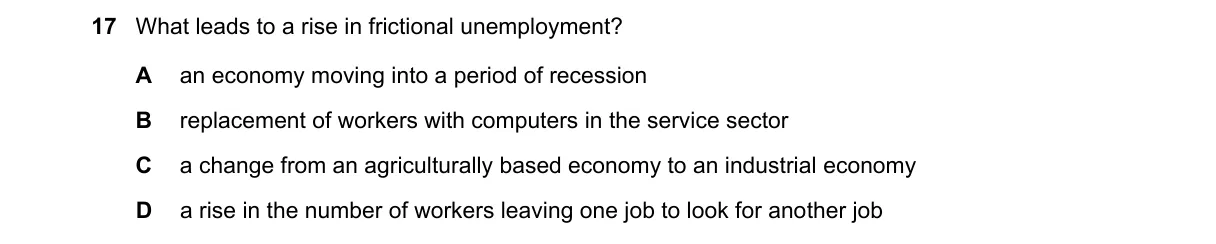
What leads to a rise in frictional unemployment?
Answer choices
- Aan economy moving into a period of recession
- Breplacement of workers with computers in the service sector
- Ca change from an agriculturally based economy to industrial economy
- Da rise in the number of workers leaving one job to look for another job
Explanation
Frictional unemployment rises from job transitions
Steps:
- Recall frictional unemployment as temporary joblessness during voluntary job searches or switches.
- Evaluate options for causes matching voluntary movement between jobs.
- Eliminate structural (skill mismatches) or cyclical (economic downturns) causes.
- Identify the option directly increasing job seekers between positions.
Why D is correct:
- Frictional unemployment is defined as the natural rate from workers quitting to seek better opportunities, so more voluntary job changes directly raise it.
Why the others are wrong:
- A causes cyclical unemployment from reduced demand in recessions.
- B causes structural unemployment from technological skill mismatches.
- C causes structural unemployment from sectoral shifts requiring new skills.
Final answer: D
Topic: Unemployment
Practice more A Level Economics (9708) questions on mMCQ.me