A Level Economics (9708)•9708/11/O/N/24
A Level Economics (9708) — 9708/11/O/N/24, Question 20
The government makes two changes to income tax. 1 The individual tax-free income allowance is increased. 2 The marginal rate of income tax is decreased. How will these changes affect aggregate demand and aggregate supply in the economy?
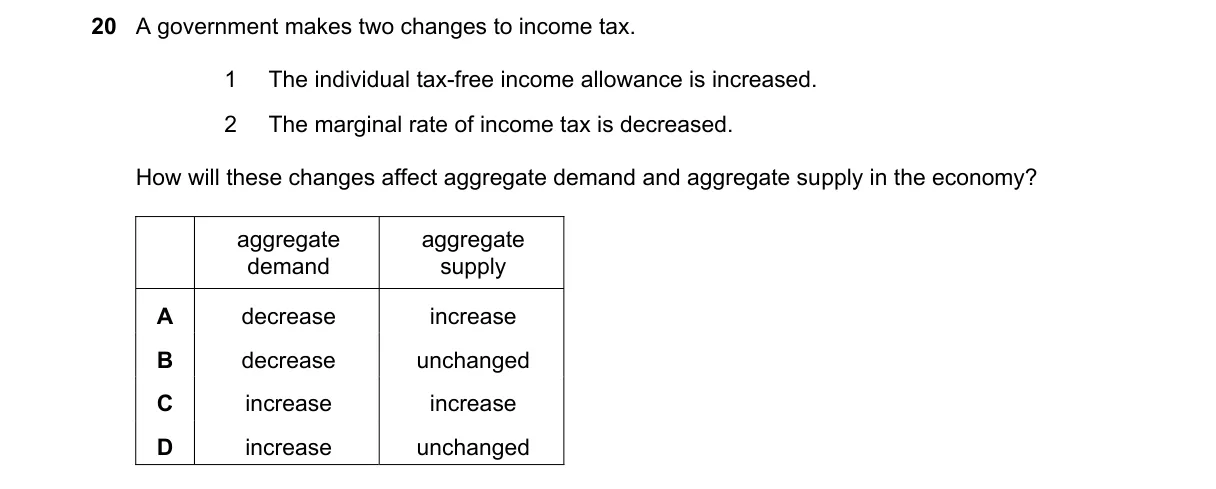
Answer choices
- AAggregate demand decreases, aggregate supply increases
- BAggregate demand decreases, aggregate supply unchanged
- CAggregate demand increases, aggregate supply unchanged
- DAggregate demand increases, aggregate supply unchanged
Explanation
Tax Cuts Boost Disposable Income and Consumption
Steps:
- Increasing the tax-free allowance raises disposable income for all taxpayers, leaving more money for spending.
- Decreasing the marginal tax rate reduces the tax burden on additional earnings, encouraging more work and higher take-home pay.
- Higher disposable income directly increases consumption, a key component of aggregate demand (AD = C + I + G + NX).
- These are fiscal policy changes affecting demand-side behavior, with no direct impact on production costs or capacity, leaving aggregate supply (AS) unchanged.
Why C is correct:
- Income tax reductions increase disposable income, shifting the consumption function upward and expanding AD per Keynesian economics.
Why the others are wrong:
- A: AD rises, not decreases; tax cuts do not contract demand.
- B: AD increases due to higher spending power.
- D: Identical to C, but listed as distinct option (possible error).
Final answer: C
Topic: Fiscal policy
Practice more A Level Economics (9708) questions on mMCQ.me