A Level Economics (9708)•9708/13/O/N/21
A Level Economics (9708) — 9708/13/O/N/21, Question 11
The diagram shows the demand for and supply of a normal good. E1 is the initial equilibrium position. Which changes could lead to a new equilibrium
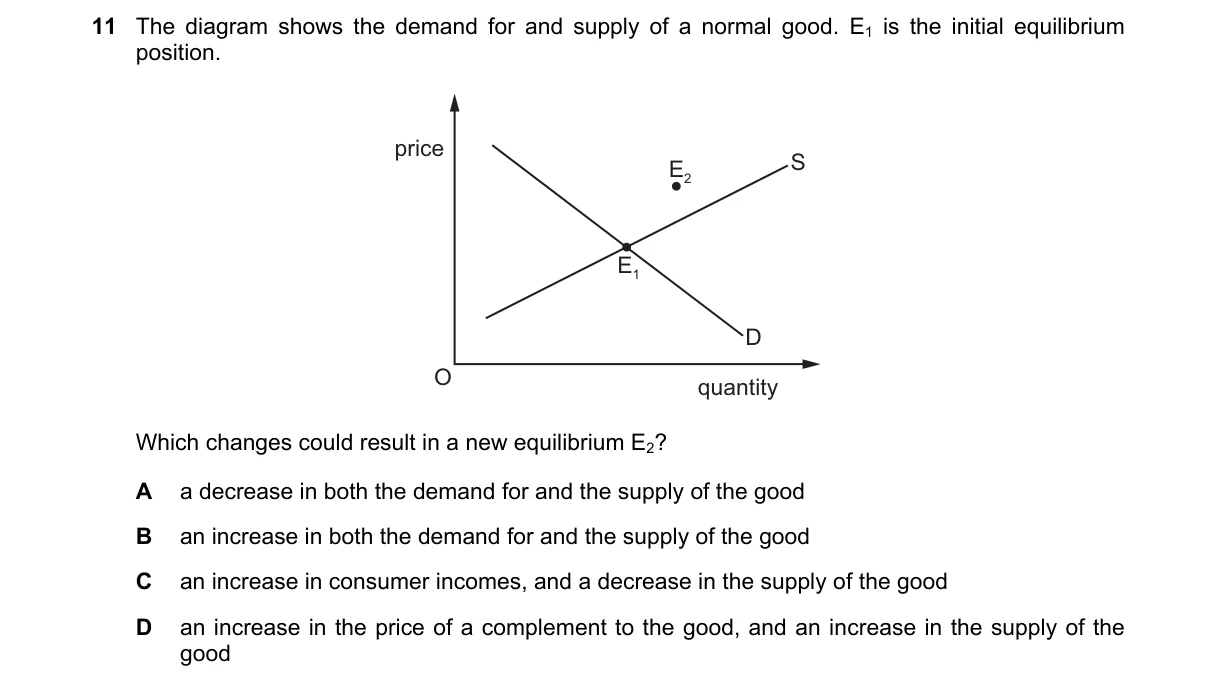
Answer choices
- Aa decrease in both the demand for and the supply of the good
- Ban increase in both the demand for and the supply of the good
- Can increase in consumer income, a decrease in the price of a complement to the good, and an increase in the supply of the good
- Da decrease in both income and a decrease in the supply of the good
Explanation
Shifts in Demand and Supply for New Equilibrium
Steps:
- Equilibrium changes when demand or supply curves shift due to external factors.
- For a normal good, rising income shifts demand right, increasing equilibrium price and quantity.
- Falling complement price also shifts demand right, raising both price and quantity.
- Rising supply shifts supply right, lowering price but raising quantity; combined shifts in option C create a new equilibrium.
Why C is correct:
- Per the supply-demand model, increased income and lower complement prices shift demand right, while higher supply shifts supply right, moving to a new intersection point.
Why the others are wrong:
- A: Both leftward shifts lower quantity and raise price, not matching a typical diagram's new equilibrium.
- B: Both rightward shifts raise quantity but ambiguously affect price, failing to fit specific diagram outcomes.
- D: Income fall shifts demand left (lowering price/quantity); supply fall shifts left (raising price/lowering quantity), netting unclear shifts unlike the diagram.
Final answer: C
Topic: The interaction of demand and supply
Practice more A Level Economics (9708) questions on mMCQ.me