A Level Economics (9708)•9708/12/O/N/21
A Level Economics (9708) — 9708/12/O/N/21, Question 29
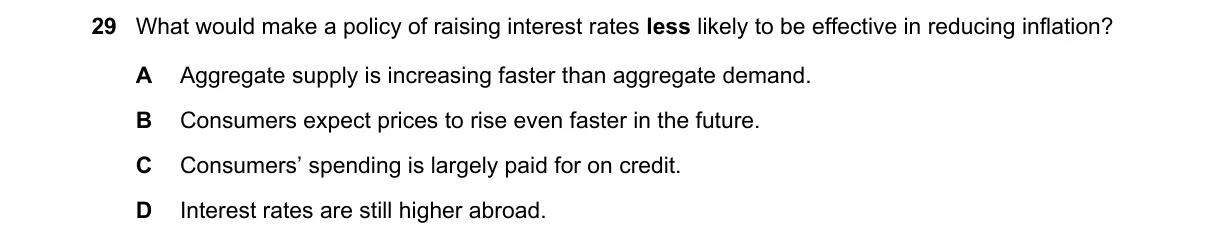
What would make a policy of raising interest rates less likely to be effective in reducing inflation?
Answer choices
- AAggregate supply is increasing faster than aggregate demand.
- BConsumers expect prices to rise even faster in the future.
- CConsumers' spending is largely paid on credit.
- DInterest rates are higher abroad.
Explanation
Inflation Expectations Weaken Monetary Tightening
Steps:
- Raising interest rates increases borrowing costs, discouraging consumer spending and investment.
- This reduces aggregate demand, easing inflationary pressures by slowing price increases.
- If consumers expect faster future inflation, they accelerate current spending to beat rising prices.
- Result: Higher demand offsets the policy's contractionary effect, prolonging inflation.
Why B is correct:
- In macroeconomic theory, rising inflation expectations lead to adaptive behaviors where agents spend more now, reducing the real interest rate's impact on demand (per the expectations-augmented Phillips curve).
Why the others are wrong:
- A: Faster aggregate supply growth relative to demand is deflationary, enhancing the policy's effectiveness in curbing inflation.
- C: Credit-based spending makes consumers more sensitive to rate hikes, amplifying the policy's demand-reducing power.
- D: Higher foreign rates could prompt capital inflows if domestic rates rise, strengthening the currency and further dampening imported inflation.
Final answer: B
Topic: Effectiveness of policy options to meet all macroeconomic objectives
Practice more A Level Economics (9708) questions on mMCQ.me