A Level Economics (9708)•9708/11/O/N/21
A Level Economics (9708) — 9708/11/O/N/21, Question 8
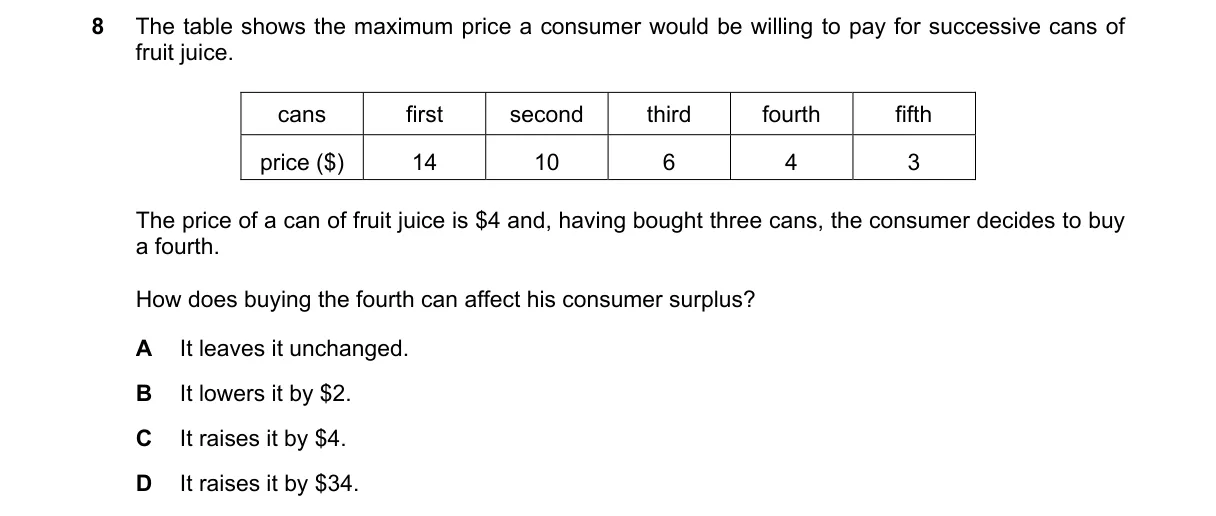
The table shows the maximum price a consumer would be willing to pay for successive cans of fruit juice. cans first second third fourth fifth price ($) 14 10 6 4 3 The price of a can of fruit juice is $4, and having bought three cans, the consumer decides to buy the fourth. How does buying the fourth can affect his consumer surplus?
Answer choices
- AIt lowers by $2.
- BIt leaves unchanged.
- CIt raises by $4.
- DIt raises by $3.
Explanation
Marginal consumer surplus falls from third to fourth can Steps:
- Surplus on third can: 4 (price) = $2.
- Surplus on fourth can: 4 (price) = $0.
- Change in marginal surplus: 2 = -$2.
- Buying fourth thus lowers marginal consumer surplus by $2.
Why A is correct:
- Marginal consumer surplus, the gain on the additional unit, drops by exactly $2 per the definition of surplus as WTP minus price.
Why the others are wrong:
- B: Total surplus across all cans stays $18, but question targets effect on surplus from buying the fourth (marginal).
- C: $4 equals price paid, not surplus change.
- D: $3 is WTP for irrelevant fifth can.
Final answer: A
Topic: Consumer and producer surplus
Practice more A Level Economics (9708) questions on mMCQ.me