A Level Economics (9708)•9708/12/O/N/20
A Level Economics (9708) — 9708/12/O/N/20, Question 5
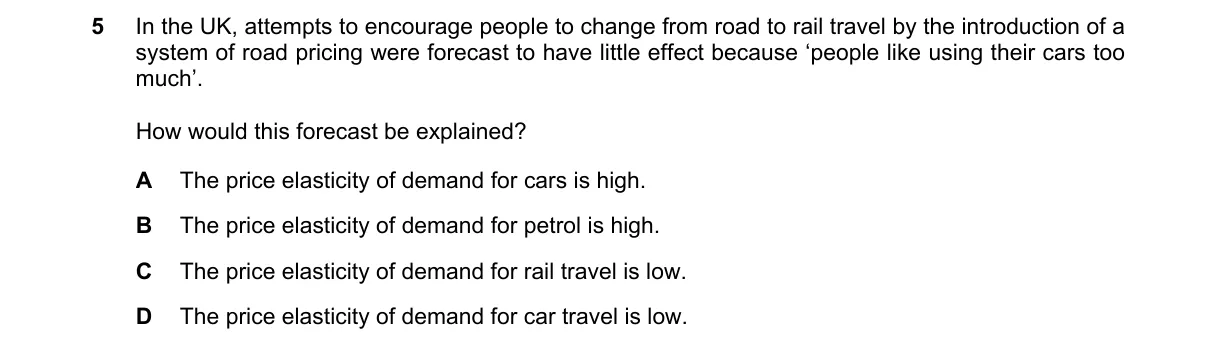
In the UK, attempts to encourage people to change from road to rail travel by the introduction of a road pricing system were forecast to have little effect because 'people like using their cars too much'. How would this forecast be explained?
Answer choices
- AThe price elasticity of demand for cars is high.
- BThe price elasticity of demand for petrol is high.
- CThe price elasticity of demand for rail travel is low.
- DThe price elasticity of demand for car travel is low.
Explanation
Low Price Elasticity of Car Travel Demand
Steps:
- Road pricing raises the cost of using cars, aiming to reduce road travel and boost rail use.
- The forecast predicts minimal shift to rail despite higher car costs.
- This indicates car travel demand remains strong even with price increases.
- Thus, the demand for car travel is price-inelastic, showing low elasticity.
Why D is correct:
- Price elasticity of demand is the percentage change in quantity demanded divided by percentage change in price; low elasticity means quantity demanded changes little with price rises, so people continue driving despite costs.
Why the others are wrong:
- A: High elasticity for cars would mean demand drops significantly with price hikes, leading to more rail shifts—contradicting the forecast.
- B: Petrol elasticity relates to fuel use, not overall car travel demand affected by pricing.
- C: Low rail elasticity explains rail demand insensitivity but not why car users resist switching.
Final answer: D
Topic: Price elasticity, income elasticity and cross elasticity of demand
Practice more A Level Economics (9708) questions on mMCQ.me