A Level Economics (9708)•9708/12/O/N/20
A Level Economics (9708) — 9708/12/O/N/20, Question 26
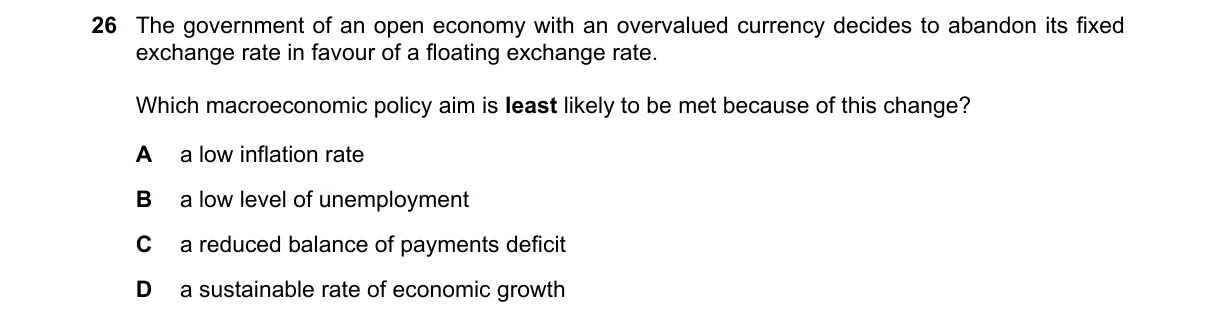
The government of an open economy with overvalued currency decides to abandon its fixed exchange rate in favour of a floating exchange rate. Which macroeconomic policy aim is least likely to be met because of this?
Answer choices
- Aa low inflation rate
- Ba low level of unemployment
- Ca reduced balance of payments deficit
- Da sustainable rate of economic growth
Explanation
Currency depreciation impacts on macro aims
Steps:
- Overvalued fixed exchange rate causes persistent trade deficits by making exports expensive and imports cheap.
- Switching to floating rate allows currency to depreciate, correcting the overvaluation toward market equilibrium.
- Depreciation boosts net exports, increasing aggregate demand and supporting growth and employment.
- However, higher import prices from depreciation raise overall price levels, hindering low inflation.
Why A is correct:
- Depreciation increases cost of imported goods, directly causing imported inflation per the exchange rate pass-through effect.
Why the others are wrong:
- B: Export-led demand expansion lowers unemployment via multiplier effects on output.
- C: Net exports improve, reducing balance of payments deficit as per the elasticities approach.
- D: Higher aggregate demand from exports sustains economic growth without overheating.
Final answer: A
Topic: Exchange rates
Practice more A Level Economics (9708) questions on mMCQ.me