A Level Economics (9708)•9708/14/M/J/25
A Level Economics (9708) — 9708/14/M/J/25, Question 14
Government decides to increase indirect taxes, abolish agricultural subsidy and lower the income level at which tax is payable. What would be the most likely consequence of these changes?
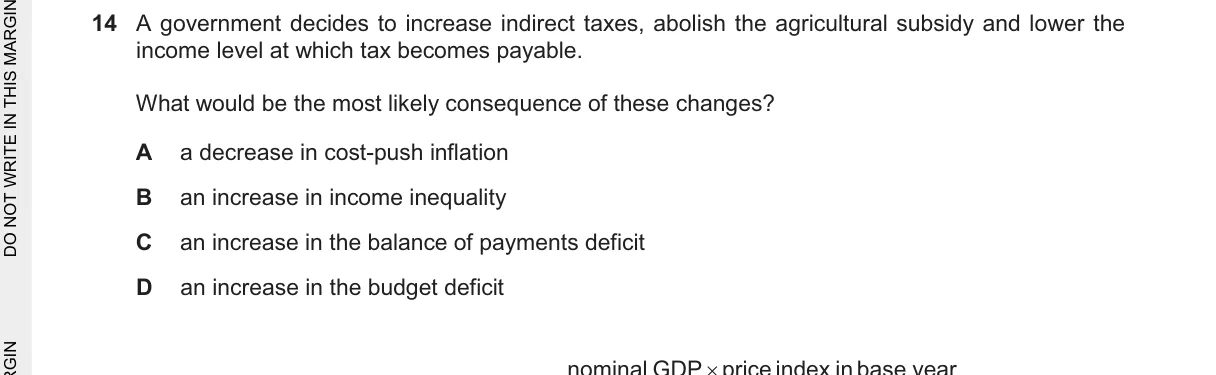
Answer choices
- Aa decrease in cost-push inflation
- Ban increase in the balance of payments deficit
- Can increase in the budget deficit
- Dan increase in nominal GDP in base year
Explanation
Fiscal contraction worsens trade balance via export reduction
Steps:
- Increasing indirect taxes raises consumer prices, curbing spending and aggregate demand.
- Abolishing agricultural subsidies hikes farmers' costs, cutting output and export volumes.
- Lowering the income tax threshold boosts revenue but slashes disposable income, further dampening consumption.
- Net effect: domestic demand falls (lowering imports), but export drop from agriculture dominates, expanding BoP deficit.
Why B is correct:
- Balance of payments deficit rises as reduced agricultural exports (per current account definition) outpace import decline from lower AD.
Why the others are wrong:
- A: Higher indirect taxes elevate production costs, fueling cost-push inflation rather than reducing it.
- C: Tax hikes and subsidy cuts raise revenue while trimming spending, shrinking the budget deficit.
- D: Contractionary policies lower AD, decreasing nominal GDP.
Final answer: B
Topic: Fiscal policy
Practice more A Level Economics (9708) questions on mMCQ.me