A Level Economics (9708)•9708/12/M/J/25
A Level Economics (9708) — 9708/12/M/J/25, Question 14
The diagram shows the demand and supply for rice. At the initial time, the equilibrium price is P, the government introduces a maximum price of P_max, at the same time the supply of rice increases to S1. What is the impact of these changes on the market for rice?
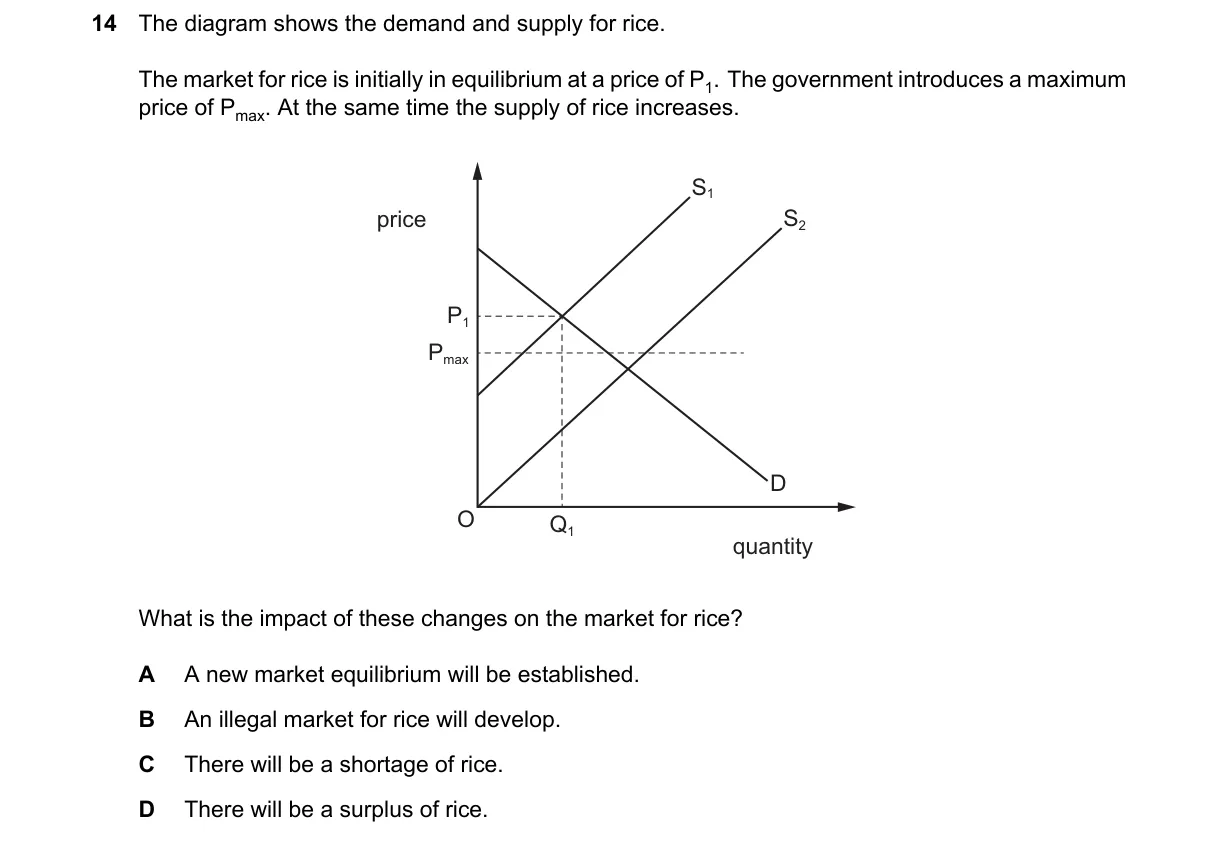
Answer choices
- AA new market equilibrium will be established.
- BThere will be a shortage of rice.
- CThere will be a surplus of rice.
- DAn illegal market for rice will develop.
Explanation
Price Ceiling with Rightward Supply Shift
Steps:
- Initial equilibrium occurs at price P, where original demand intersects original supply.
- Price ceiling at P_max is imposed, potentially limiting price below P if binding.
- Supply shifts right to S1, increasing quantity supplied at each price and lowering the equilibrium price.
- New equilibrium forms at intersection of demand and S1, provided P_max exceeds this new price, allowing market clearing.
Why A is correct:
- With supply increase, the new demand-S1 intersection establishes a stable equilibrium if the ceiling is non-binding (above new price), per supply-demand law.
Why the others are wrong:
- B: Shortage occurs only if ceiling binds below new equilibrium; here, supply shift prevents it.
- C: Surplus requires ceiling above equilibrium without demand change; supply increase avoids excess.
- D: Illegal market develops from binding shortages; non-binding ceiling eliminates need.
Final answer: A
Topic: Methods and effects of government intervention in markets
Practice more A Level Economics (9708) questions on mMCQ.me