A Level Economics (9708)•9708/11/M/J/25
A Level Economics (9708) — 9708/11/M/J/25, Question 30
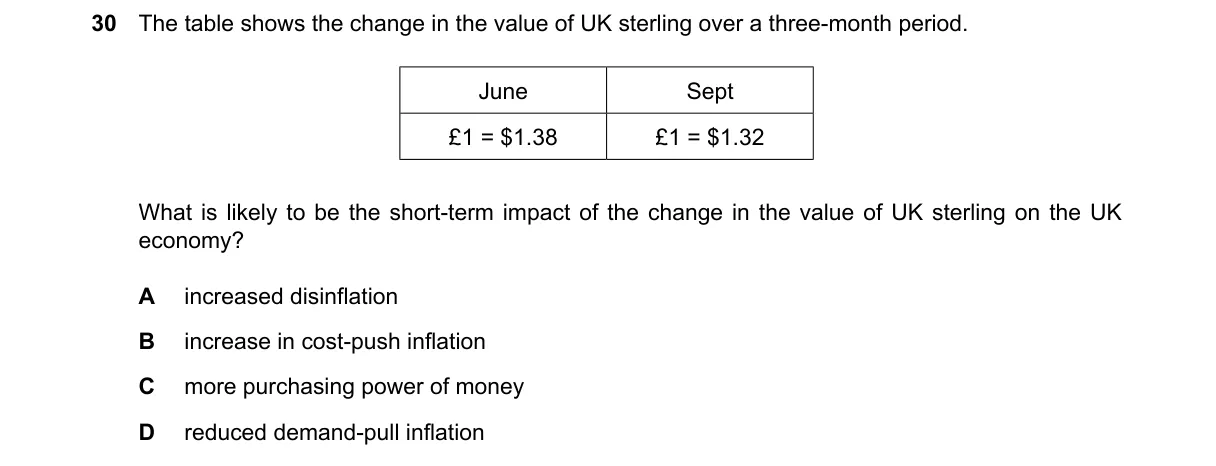
The table shows the change in value of sterling over a three-month period.
£1 = $1.38 £1 = $1.32
What is likely to be the short-term impact of the change in the value of sterling on the UK
Answer choices
- Aeconomy?
- Bincrease disinflation
- Cincrease in cost-push inflation
- Dreduced demand-pull inflation
Explanation
Depreciation of sterling boosts net exports, moderating inflation Steps:
- Note the exchange rate change: £1 falls from 1.32, meaning sterling depreciates.
- Depreciation makes UK exports cheaper abroad, increasing demand for UK goods.
- Higher exports raise aggregate supply without matching domestic demand surge.
- This eases price pressures, slowing the inflation rate (disinflation).
Why B is correct:
- In the AD-AS model, depreciation shifts aggregate supply rightward via export growth, reducing inflationary gaps and increasing disinflation (slowdown in inflation rate).
Why the others are wrong:
- A: Incomplete option; depreciation stimulates growth via exports, not contraction.
- C: Import costs rise, but short-term export gains dominate to curb overall inflation.
- D: Export boost actually sustains demand, not reducing demand-pull inflation.
Final answer: B
Topic: Exchange rates
Practice more A Level Economics (9708) questions on mMCQ.me