A Level Economics (9708)•9708/11/M/J/25
A Level Economics (9708) — 9708/11/M/J/25, Question 22
Government decides to raise most of its revenues from indirect taxes. What would increase the effectiveness of this policy?
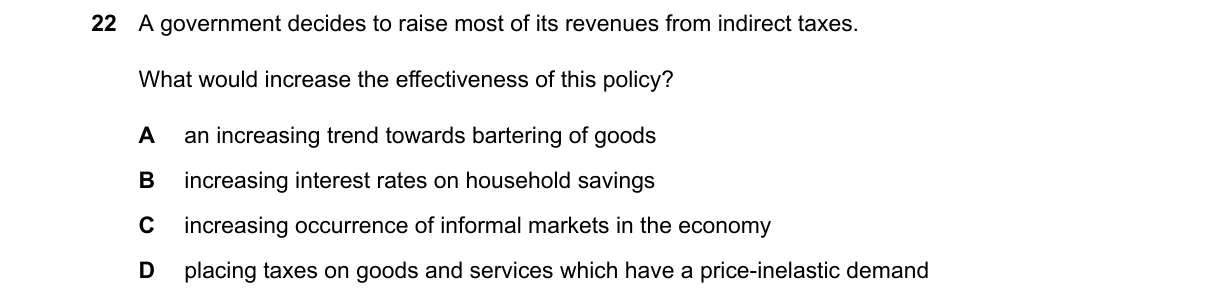
Answer choices
- Aan increasing trend towards bartering of goods
- Bincreasing interest rates on household savings
- Cincreasing occurrence of informal markets in the economy
- Dplacing taxes on goods and services which have a price-inelastic demand
Explanation
Targeting inelastic demand boosts indirect tax revenue
Steps:
- Indirect taxes, like sales taxes, raise prices and aim to generate government revenue without significantly reducing consumption.
- Effectiveness means maximizing revenue yield, which depends on how much quantity demanded falls after the tax increases price.
- Price elasticity of demand measures responsiveness: inelastic demand (elasticity <1) means quantity falls little, so tax revenue rises.
- Thus, applying taxes to inelastic goods/services ensures high revenue collection.
Why D is correct:
- Price-inelastic demand means consumers buy nearly the same quantity despite higher prices from taxes, maximizing revenue per the tax incidence formula where revenue = tax rate × quantity sold.
Why the others are wrong:
- A: Bartering avoids indirect taxes on monetary transactions, reducing taxable sales and revenue.
- B: Higher savings rates divert spending from taxed goods/services, lowering consumption and tax base.
- C: Informal markets evade taxes entirely, shrinking the formal economy's taxable transactions.
Final answer: D
Topic: Methods and effects of government intervention in markets
Practice more A Level Economics (9708) questions on mMCQ.me