A Level Economics (9708)•9708/11/M/J/24
A Level Economics (9708) — 9708/11/M/J/24, Question 20
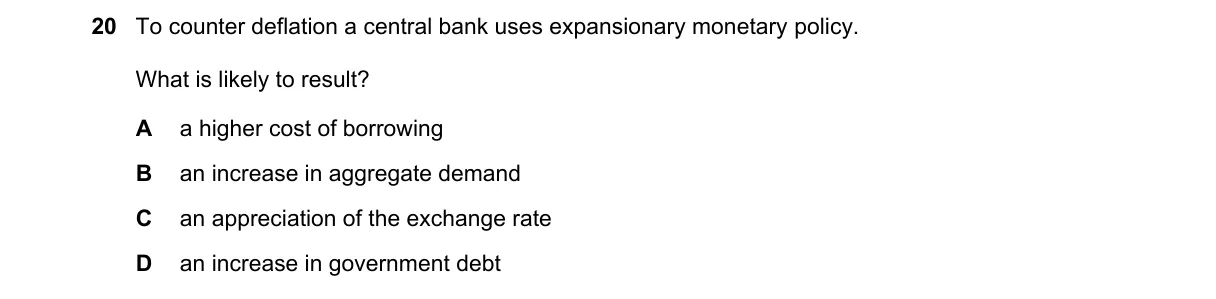
To counter deflation a central bank uses expansionary monetary policy. What is likely result?
Answer choices
- Aa higher cost of borrowing
- Ban increase in aggregate demand
- Can appreciation in the exchange rate
- Dan increase in government debt
Explanation
Expansionary Monetary Policy Boosts Demand to Fight Deflation
Steps:
- Deflation is falling prices, often from weak demand, so central banks use expansionary policy like lowering interest rates or buying bonds.
- This increases money supply, making borrowing cheaper and encouraging spending and investment.
- Cheaper credit stimulates consumption and business activity, shifting the aggregate demand curve rightward.
- Higher demand raises prices, countering deflation without immediate inflation risks.
Why B is correct:
- Expansionary policy directly increases aggregate demand by lowering interest rates, per the IS-LM model, where reduced rates boost investment and consumption.
Why the others are wrong:
- A: Expansionary policy lowers borrowing costs, not raises them.
- C: It typically causes currency depreciation by increasing money supply and lowering rates.
- D: This relates to fiscal policy, not monetary actions by the central bank.
Final answer: B
Topic: Monetary policy
Practice more A Level Economics (9708) questions on mMCQ.me