A Level Economics (9708)•9708/12/M/J/22
A Level Economics (9708) — 9708/12/M/J/22, Question 30
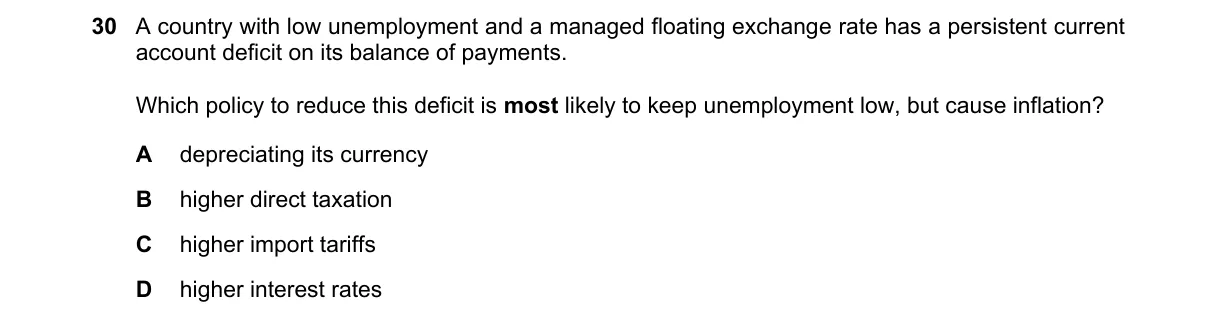
A country with low unemployment and a managed floating exchange rate has persistent current account deficit on its balance of payments. Which policy to reduce this deficit is most likely to keep unemployment low, but cause inflation?
Answer choices
- ADepreciating its currency
- Bhigher direct taxation
- Chigher import tariffs
- Dhigher interest rates
Explanation
Currency depreciation improves trade balance via price effects
Steps:
- Persistent current account deficit means imports exceed exports, needing policy to boost exports or curb imports.
- Low unemployment limits contractionary policies that risk job losses; focus on expansionary or trade-specific options allowing inflation.
- Managed floating rate enables currency depreciation to adjust trade competitiveness without fiscal/monetary tightening.
- Evaluate: Depreciation enhances net exports, stimulates demand at full employment (causing inflation), unlike others that either worsen deficit or raise unemployment.
Why A is correct:
- Depreciation lowers export prices and raises import prices abroad/domestically (per purchasing power parity), improving current account without reducing aggregate demand that affects jobs.
Why the others are wrong:
- B: Higher direct taxation cuts disposable income, reducing imports but contracting economy and raising unemployment.
- C: Higher import tariffs reduce imports but risk trade retaliation, harming export jobs and potentially increasing unemployment.
- D: Higher interest rates attract capital inflows, appreciating currency and worsening deficit while slowing growth to raise unemployment.
Final answer: A
Topic: Policies to correct imbalances in the current account of the balance of payments
Practice more A Level Economics (9708) questions on mMCQ.me