A Level Economics (9708)•9708/12/M/J/21
A Level Economics (9708) — 9708/12/M/J/21, Question 22
What is correct about the causes of inflation?
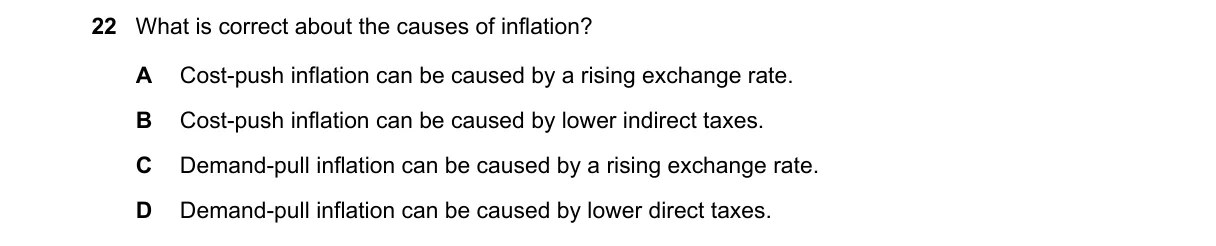
Answer choices
- ACost-push inflation can be caused by lower indirect taxes.
- BCost-push inflation can be caused by lower direct taxes.
- CDemand-pull inflation can be caused by a rising exchange rate.
- DDemand-pull inflation can be caused by lower direct taxes.
Explanation
Causes of Demand-Pull vs. Cost-Push Inflation
Steps:
- Define demand-pull inflation as rising prices from excess aggregate demand, often due to higher spending.
- Define cost-push inflation as rising prices from increased production costs passed to consumers.
- Evaluate each option against these definitions to identify the accurate cause.
- Confirm D aligns with demand-pull via tax effects on disposable income.
Why D is correct:
- Lower direct taxes increase households' disposable income, boosting consumption and aggregate demand, which causes demand-pull inflation per the AD-AS model.
Why the others are wrong:
- A: Lower indirect taxes reduce production costs, easing cost-push pressures and potentially causing disinflation.
- B: Lower direct taxes stimulate demand, not production costs, so they cause demand-pull, not cost-push inflation.
- C: A rising exchange rate appreciates the currency, making imports cheaper and reducing aggregate demand, which curbs demand-pull inflation.
Final answer: D
Topic: Aggregate Demand and Aggregate Supply analysis
Practice more A Level Economics (9708) questions on mMCQ.me