A Level Economics (9708)•9708/11/M/J/21
A Level Economics (9708) — 9708/11/M/J/21, Question 21
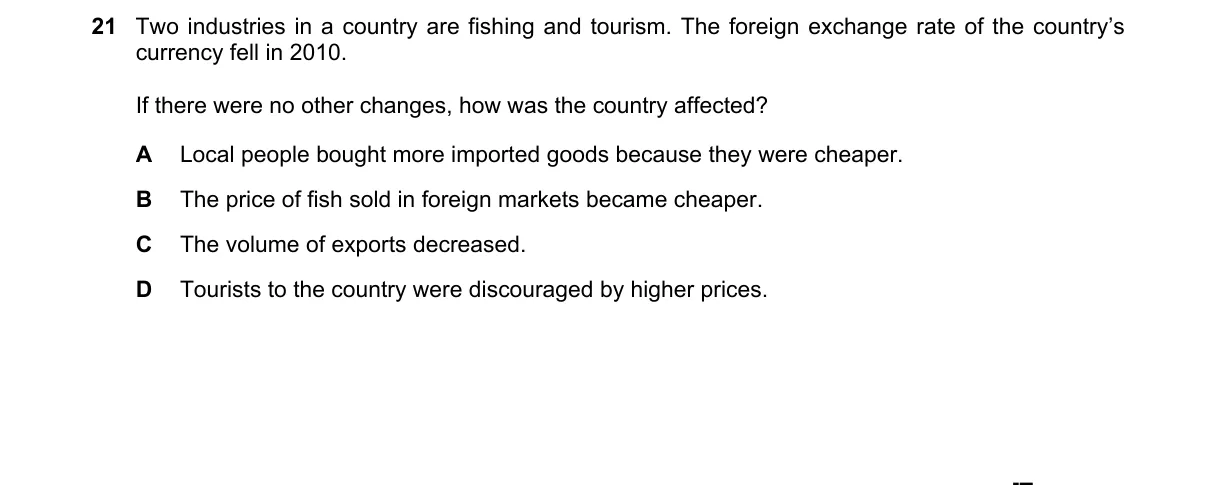
Two industries in country X are fishing and tourism. The foreign exchange rate of the country's currency fell in 2010. If there were no other changes, how the country's currency fall in 2010 affected
Answer choices
- ALocal people bought more imported goods because they were cheaper.
- BThe price of fish sold in foreign markets became cheaper.
- CThe volume of exports decreased.
- DTourists to the country were discouraged by higher prices.
Explanation
Currency Depreciation Boosts Export Competitiveness
Steps:
- A fall in the foreign exchange rate means the domestic currency depreciates against foreign currencies.
- Depreciation lowers the price of domestic goods in foreign markets, benefiting export industries like fishing.
- For tourism, foreign visitors face higher costs in their currency, potentially reducing inflows.
- Overall, exports become more attractive, while imports grow costlier for locals.
Why B is correct:
- Currency depreciation reduces the foreign-currency price of exports, per the exchange rate definition where 1 unit of domestic currency buys fewer foreign units, making fish cheaper abroad.
Why the others are wrong:
- A: Depreciation raises import prices, so locals buy fewer imported goods.
- C: Lower export prices typically increase export volume via improved competitiveness.
- D: Higher costs for tourists in their currency would discourage visits, but the effect aligns with reduced tourism, not the primary export impact.
Final answer: B
Topic: Exchange rates
Practice more A Level Economics (9708) questions on mMCQ.me