A Level Economics (9708)•9708/13/M/J/19
A Level Economics (9708) — 9708/13/M/J/19, Question 16
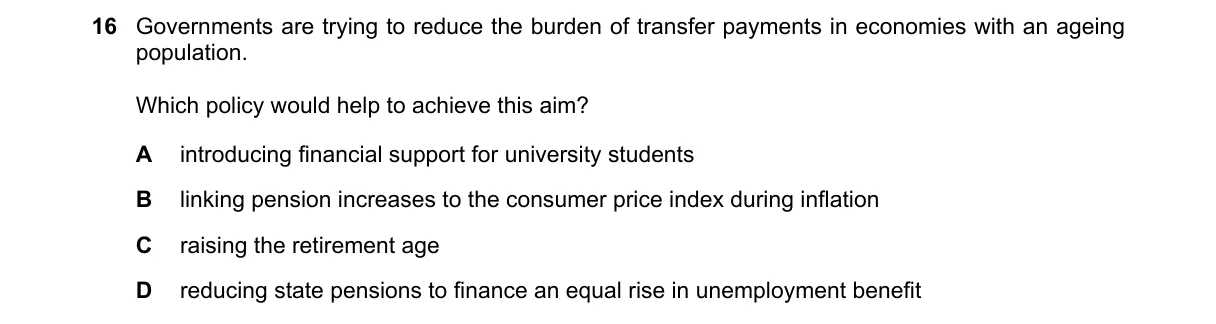
Governments are trying to reduce the burden of transfer payments in economies with an aging population. Which policy would help achieve this aim?
Answer choices
- AIntroducing financial support for university students
- BLinking pension increases to the consumer price index during inflation
- CRaising the retirement age
- DReducing state pensions to finance an equal rise in unemployment benefit
Explanation
Reducing pension expenditures through delayed retirement
Steps:
- Identify transfer payments as government benefits like pensions without direct exchange, straining budgets with aging populations.
- Recognize aging populations increase pension demands as more retirees draw benefits longer.
- Evaluate policies: Seek one that shortens benefit duration or eligibility without shifting burdens elsewhere.
- Select option minimizing total payouts by extending working years.
Why C is correct:
- Raising the retirement age delays pension eligibility, reducing years of payments per retiree and total transfer burden, per standard fiscal policy on social security sustainability.
Why the others are wrong:
- A increases transfer payments to students, adding new burdens unrelated to aging.
- B maintains pension value against inflation, preserving or raising expenditures without reduction.
- D shifts funds from pensions to unemployment benefits, keeping total transfers unchanged.
Final answer: C
Topic: Supply-side policy
Practice more A Level Economics (9708) questions on mMCQ.me