A Level Accounting (9706)•9706/13/O/N/24
A Level Accounting (9706) — 9706/13/O/N/24, Question 11
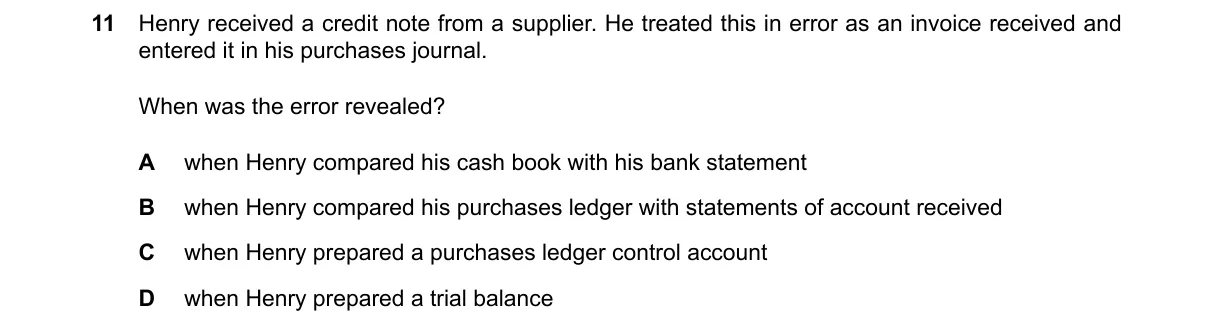
Henry received a credit note from a supplier. He treated this as an error in an invoice received and entered it in his purchases journal. When was the error revealed?
Answer choices
- AWhen Henry compared his cash book with his bank statement
- BWhen Henry compared his purchases ledger with statements of account received
- CWhen Henry prepared a purchases ledger control account
- DWhen Henry prepared a balance control account
Explanation
Credit Note Misrecording Detected in Ledger Reconciliation
Steps:
- Credit note reduces supplier balance but Henry records it as a purchase, increasing the balance in purchases journal and ledger.
- This creates a discrepancy between Henry's supplier account and the supplier's actual records.
- Supplier statements reflect the credit note application, showing a lower balance.
- Comparison highlights the error in the individual supplier account.
Why B is correct:
- Purchases ledger tracks individual supplier balances; reconciling with supplier statements (per standard accounting procedure) identifies unapplied credits or errors in specific accounts.
Why the others are wrong:
- A: Cash book-bank reconciliation detects cash flow issues, not purchase ledger errors.
- C: Control account preparation summarizes totals; individual credit note errors may not cause imbalance.
- D: Balance control account (likely nominal ledger) oversees overall balances, missing specific supplier discrepancies.
Final answer: B
Topic: Reconciliation and verification
Practice more A Level Accounting (9706) questions on mMCQ.me