A Level Accounting (9706)•9706/12/O/N/24
A Level Accounting (9706) — 9706/12/O/N/24, Question 21
A company's return on capital employed decreased to 10% in the current year from 15% in the previous year. The directors have noted the following changes during the current year: 1. A substantial investment in non-current assets was funded by new debentures. 2. There was an increase in current liabilities. 3. The expense of interest on the company's overdraft increased. 4. The expenses to revenue ratio increased. Which changes could explain the decrease in the return on capital employed?
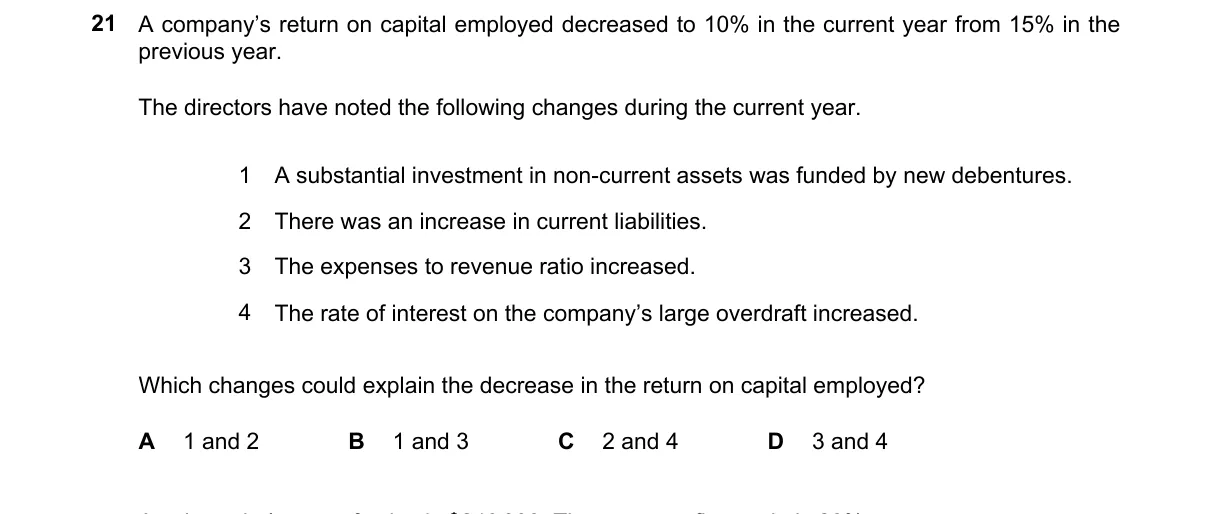
Answer choices
- A1 and 2
- B1 and 3
- C2 and 4
- D3 and 4
Explanation
Financing and interest effects on ROCE
Steps:
- Recall ROCE = (Profit before interest and tax / Capital employed) × 100, where capital employed = total assets - current liabilities.
- Change 1 increases non-current assets and long-term debt (debentures), raising capital employed without guaranteed profit rise, lowering ROCE.
- Change 3 raises interest expense on overdraft, reducing profit before interest and tax, directly lowering ROCE.
- Changes 2 and 4 either counteract the decrease or are not primary drivers per the scenario.
Why B is correct:
- Per ROCE formula, new debentures (change 1) inflate capital employed, while higher overdraft interest (change 3) cuts profit, both reducing the ratio.
Why the others are wrong:
- A: Change 2 (higher current liabilities) reduces capital employed, potentially raising ROCE.
- C: Change 2 would increase ROCE; change 4 affects profit but pairs incorrectly.
- D: Ignores change 1's capital impact; focuses only on profit reduction.
Final answer: B
Topic: Analysis and communication of accounting information
Practice more A Level Accounting (9706) questions on mMCQ.me