A Level Accounting (9706)•9706/11/O/N/24
A Level Accounting (9706) — 9706/11/O/N/24, Question 2
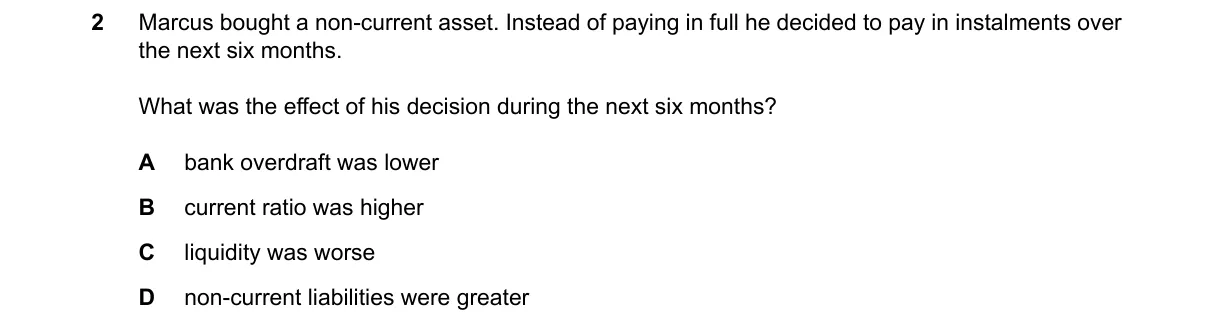
Marcus bought a non-current asset. Instead of paying in full he decided to pay in instalments over the next six months. What was the effect on his overdraft during the next six months?
Answer choices
- Abank overdraft was lower
- Bcurrent ratio was higher
- Cliquidity was higher
- Dnon-current liabilities were greater
Explanation
Instalment payments defer cash outflows, reducing overdraft usage
Steps:
- Purchasing a non-current asset typically requires full payment, drawing heavily on the bank overdraft.
- Opting for instalments spreads payments over six months, minimizing initial cash outflow.
- During this period, smaller periodic payments result in less overdraft utilization compared to full upfront payment.
- Thus, the bank overdraft balance remains lower throughout the six months.
Why A is correct:
- Overdraft represents short-term borrowing for cash needs; deferred payments under instalments reduce immediate borrowing, keeping the overdraft lower per the cash flow definition.
Why the others are wrong:
- B: Instalments create current liabilities, increasing the denominator in current ratio (current assets/current liabilities), likely lowering it.
- C: Liquidity measures short-term solvency; future instalment obligations reduce available cash for other needs, not increasing liquidity.
- D: Six-month instalments classify as current liabilities, not non-current (due within one year).
Final answer: A
Topic: Accounting for non-current assets
Practice more A Level Accounting (9706) questions on mMCQ.me