A Level Accounting (9706)•9706/11/O/N/23
A Level Accounting (9706) — 9706/11/O/N/23, Question 5
Which statement identifies why depreciation is provided on non-current assets?
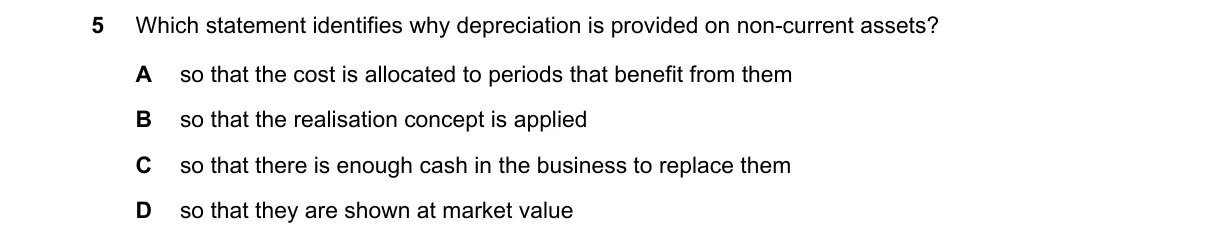
Answer choices
- Aso that the cost is allocated to periods that benefit from them
- Bso that the realisation concept is applied to them
- Cso there is enough cash in the business to replace them
- Dso that they are shown at market value
Explanation
Depreciation Matches Costs to Revenue Periods
Steps:
- Identify depreciation as a method to spread the cost of non-current assets over their useful life.
- Recall the matching principle in accounting, which requires expenses to align with the revenue they generate.
- Evaluate each option against this principle to find the best match.
- Confirm the option that directly reflects cost allocation for benefiting periods.
Why A is correct:
- Depreciation allocates the asset's cost to accounting periods benefiting from its use, per the matching principle (IAS 16), ensuring expenses match related revenues.
Why the others are wrong:
- B: Realisation concept applies to revenue recognition, not asset cost allocation.
- C: Depreciation is a non-cash expense; it does not generate cash for replacement.
- D: Depreciation reduces book value based on cost, not market value adjustments.
Final answer: A
Topic: Accounting for non-current assets
Practice more A Level Accounting (9706) questions on mMCQ.me