A Level Accounting (9706)•9706/13/O/N/22
A Level Accounting (9706) — 9706/13/O/N/22, Question 11
When preparing a sole trader's financial statements, no adjustment was made for a prepayment at the end of the year. What is the effect of this omission?
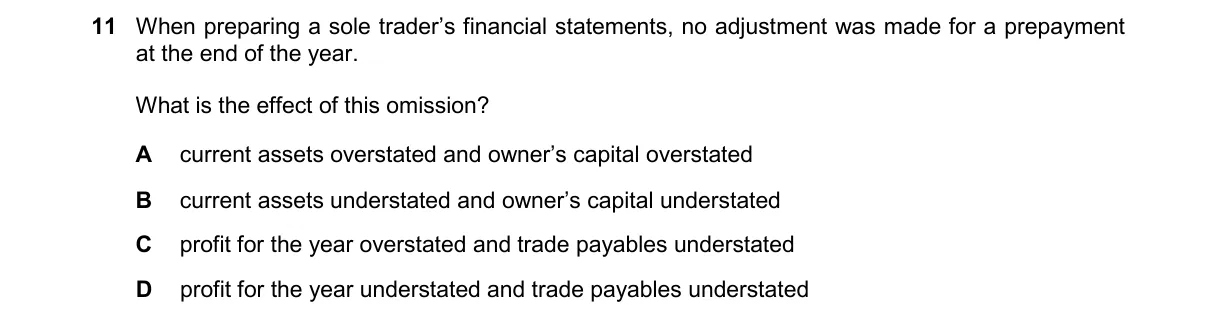
Answer choices
- ACurrent assets overstated and owner's capital overstated
- BCurrent assets understated and owner's capital understated
- CProfit for the year overstated and trade payables understated
- DProfit for the year understated and trade payables overstated
Explanation
Omission of prepayment adjustment understates assets and equity
Steps:
- Prepayment is an expense paid in advance for future periods, creating a current asset.
- Adjusting entry: debit prepayments (asset) and credit expenses to reduce current-year expense.
- Without adjustment, full prepayment is expensed, overstating expenses and understating profit.
- This leaves no asset recorded, understating current assets and owner's capital via lower retained profit.
Why B is correct:
- Per accrual accounting principle, unadjusted prepayments overstate expenses (understating profit/capital) and omit the asset (understating current assets).
Why the others are wrong:
- A: Adjustment increases assets and capital, so omission does the opposite.
- C: Profit is understated (not overstated); prepayments do not affect trade payables.
- D: Trade payables unaffected by prepayments; profit is understated, not overstated.
Final answer: B
Topic: Preparation of financial statements
Practice more A Level Accounting (9706) questions on mMCQ.me