A Level Accounting (9706)•9706/13/O/N/21
A Level Accounting (9706) — 9706/13/O/N/21, Question 18
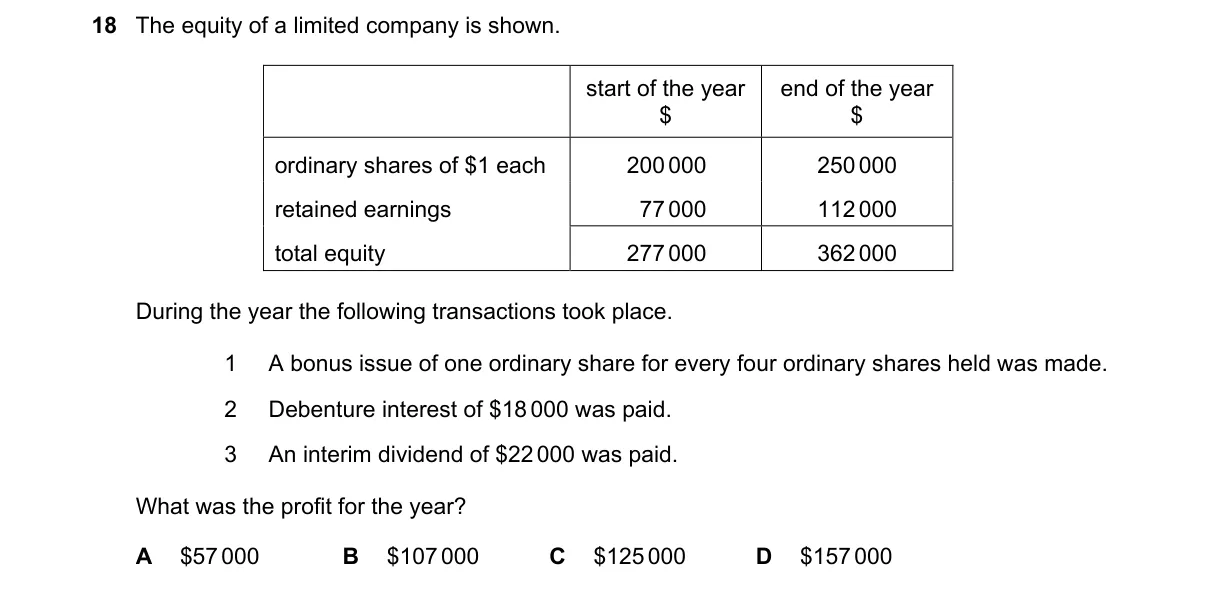
The equity of a limited company is shown.
Start of year ($) | End of year ($)
Ordinary shares | 200,000 | 250,000
Retained earnings | 77,000 | 112,000
Total equity | 277,000 | 362,000
During the year the following transactions took place.
1 A bonus issue of one share for every four ordinary shares held was made.
2 Debenture interest of $18,000 was paid.
3 An interim dividend of $22,000 was paid.
What is the profit for the year?
Answer choices
- A$57,000
- B$10,000
- C$12,500
- D$15,000
Explanation
Profit from bonus issue net of payments Steps:
- Determine bonus issue value: original share capital 50,000 added to share capital from retained earnings.
- Note payments reducing available profit: debenture interest 22,000 (appropriation).
- Total payments: 22,000 = $40,000.
- Profit for the year: bonus issue value - total payments = 40,000 = $10,000.
Why B is correct:
- Under accounting for bonus issues, the capitalized amount represents profit available after deducting expenses (like interest) and appropriations (like dividends), per the retained earnings transfer rule.
Why the others are wrong:
- A. Ignores bonus issue transfer and treats change in retained earnings plus dividend only.
- C. Miscalculates bonus proportion, e.g., dividing share capital increase by 4.
- D. Subtracts incomplete payments or uses wrong base figure like interest alone.
Final answer: B
Topic: Preparation of financial statements
Practice more A Level Accounting (9706) questions on mMCQ.me