A Level Accounting (9706)•9706/13/O/N/19
A Level Accounting (9706) — 9706/13/O/N/19, Question 23
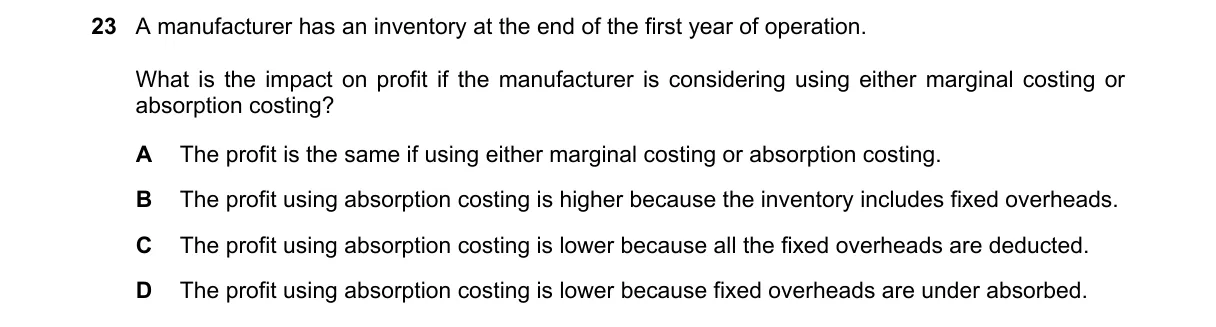
A manufacturer has an inventory at the end of the first year of operation. What is the impact on profit if the manufacturer is considering using either marginal costing or absorption costing?
Answer choices
- AThe profit using absorption costing is the same if using either marginal costing or absorption costing.
- BThe profit using absorption costing is higher because the inventory includes fixed overheads.
- CThe profit using absorption costing is lower because the fixed overheads are absorbed.
- DThe profit using absorption costing is lower because fixed overheads are under absorbed.
Explanation
Fixed Overheads in Inventory Valuation
Steps:
- Marginal costing expenses all fixed overheads in the period incurred, regardless of production or sales.
- Absorption costing allocates fixed overheads to units produced, including them in inventory value.
- With ending inventory in the first year, absorption costing defers some fixed overheads to the balance sheet.
- This deferral reduces expenses in the income statement, increasing profit compared to marginal costing.
Why B is correct:
- Absorption costing includes fixed overheads in closing inventory per standard costing principles, deferring their expense and boosting reported profit when inventory rises.
Why the others are wrong:
- A: Profits differ because absorption costing capitalizes fixed overheads in inventory, while marginal does not.
- C: Absorption costing increases profit by absorbing fixed overheads into inventory, not decreasing it.
- D: No under-absorption is indicated; the scenario involves normal absorption into ending inventory.
Final answer: B
Topic: Traditional costing methods
Practice more A Level Accounting (9706) questions on mMCQ.me