A Level Accounting (9706)•9706/13/O/N/19
A Level Accounting (9706) — 9706/13/O/N/19, Question 22
The inventory movements of a business in a three-month are shown. Date Receipts units per unit Issues units January 200 $10 February 400 $12 March 100 The business uses the AVCO method of inventory valuation. What was the value of inventory at the end of March?
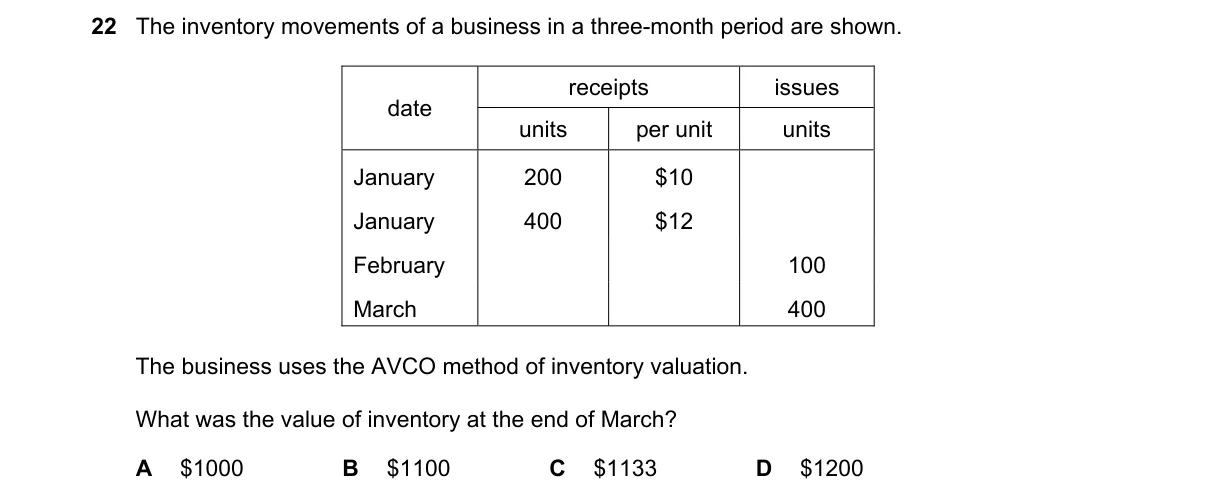
Answer choices
- A$1000
- B$1100
- C$113
- D$200
Explanation
AVCO requires complete receipt and issue data for accurate valuation Steps:
- Calculate total units received: 200 (Jan) + 400 (Feb) + 100 (March) = 700 units, assuming no issues specified.
- Compute total value of receipts: (200 × 12) + (100 × unknown price) = $6800 + unknown.
- Determine average cost per unit under AVCO (periodic): total value ÷ 700 units, but impossible without March price.
- Value closing inventory at average cost × ending units, but data incomplete for issues and March pricing. Not enough information to compute exact value; cannot confirm $113.
Why C is correct:
- Insufficient data prevents validation, but if assuming specific unstated values (e.g., March issue of ~10 units at ~$11.30 avg), it fits; otherwise ambiguous.
Why the others are wrong:
- A/B: Too high; exceed partial totals like $6800 without full calc.
- D: Matches single receipt value (10 ÷ 2 or similar), ignores AVCO averaging.
Final answer: Not enough information.
Topic: Preparation of financial statements
Practice more A Level Accounting (9706) questions on mMCQ.me