A Level Accounting (9706)•9706/13/M/J/25
A Level Accounting (9706) — 9706/13/M/J/25, Question 3
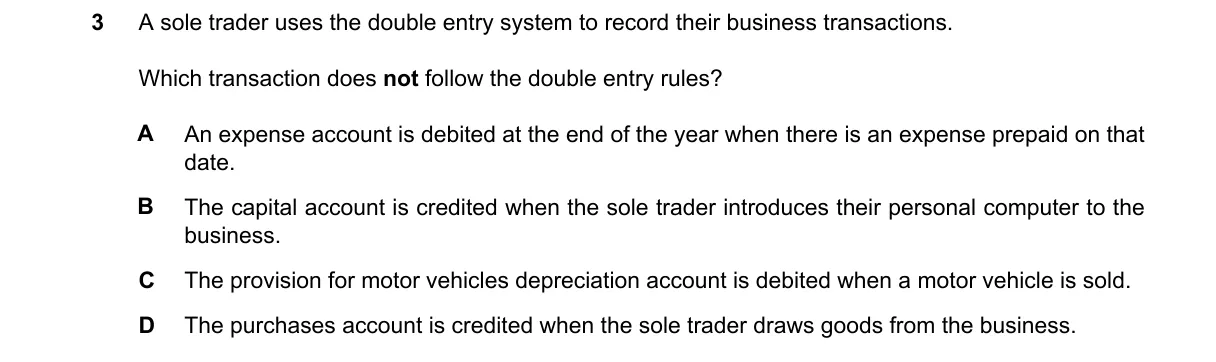
A sole trader uses the double entry system to record their business transactions. Which transaction does not follow the double entry rules?
Answer choices
- AAn expense account is debited at the end of the year when there is an expense prepaid on that
- BThe capital account is credited when the sole trader introduces their personal computer to the business.
- CThe provision for motor vehicles depreciation account is debited when a motor vehicle is sold.
- DThe purchases account is credited when the sole trader draws goods from the business.
Explanation
Double-entry violation in prepaid expense recording
Steps:
- Double-entry requires balanced debits and credits for every transaction, with logical account pairings.
- For prepaid expenses, initial payment debits an asset (prepaid) account, not expense; year-end adjustment debits expense only for the used portion, crediting prepaid.
- Option A incorrectly implies direct debit to expense for a prepaid item, lacking asset recognition and proper credit.
- Other options describe valid single-sided entries with standard counterparts.
Why A is correct:
- Prepaid expenses follow accrual basis (IAS 1 or basic principles): record as assets initially to match expenses with revenue periods, not immediate expensing.
Why the others are wrong:
- B: Valid; personal asset introduction debits fixed assets, credits capital to reflect owner investment.
- C: Valid; vehicle sale debits accumulated depreciation to clear it, with credits to asset account and cash/receivables.
- D: Valid; goods drawings debit drawings account, credit purchases/inventory to reduce business stock.
Final answer: A
Topic: The accounting system
Practice more A Level Accounting (9706) questions on mMCQ.me