A Level Accounting (9706)•9706/12/M/J/25
A Level Accounting (9706) — 9706/12/M/J/25, Question 7
The non-current assets of a business are shown in the table. Cost Accumulated depreciation Start of year 300,000 End of year 360,000 Carrying value 120,000 275,000 During the year, non-current assets costing $110,000 were bought, non-current assets, with carrying value of $20,000, were sold. What was the depreciation for the year?
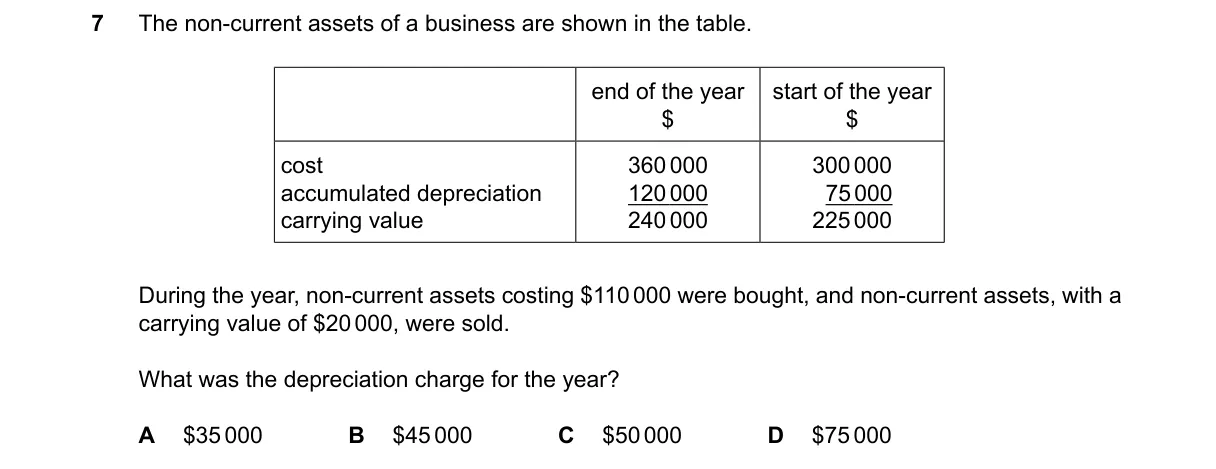
Answer choices
- A$35,000
- B$45,000
- C$50,000
- D$75,000
Explanation
Depreciation via accumulated depreciation T-account Steps:
- Opening accumulated depreciation = opening cost (120,000) = $180,000
- Cost of sold assets = opening cost (110,000) - closing cost (50,000
- Accumulated depreciation on sold assets = cost of sold assets (20,000) = $30,000
- Depreciation expense = [closing cost (180,000) + accumulated depreciation on sold (75,000 Why D is correct:
- Depreciation expense balances the T-account: closing accum. dep. = opening accum. dep. + expense - dep. on disposals; rearranged, expense = closing accum. dep. - opening + dep. on disposals. Why the others are wrong:
- A. $35,000: Underestimates by ignoring full adjustment for disposals and purchases.
- B. 30,000).
- C. $50,000: Equals cost of sold assets, not the expense charged.
Final answer: D
Topic: Accounting for non-current assets
Practice more A Level Accounting (9706) questions on mMCQ.me