A Level Accounting (9706)•9706/13/M/J/24
A Level Accounting (9706) — 9706/13/M/J/24, Question 24
A business uses first in first out (FIFO) method for valuation of inventory. There was no opening inventory in July. The business purchased direct materials during July as follows: July 3 purchases 2000 kg $25 per kg; 15 purchases 3000 kg $28 per kg. Each unit required 4 kg of direct materials. The labour cost for 4 kg of direct materials was $42. The fixed overhead for July was $850. In July 1000 units were produced and 800 units were sold. What is the direct labour cost and fixed overhead per unit produced?
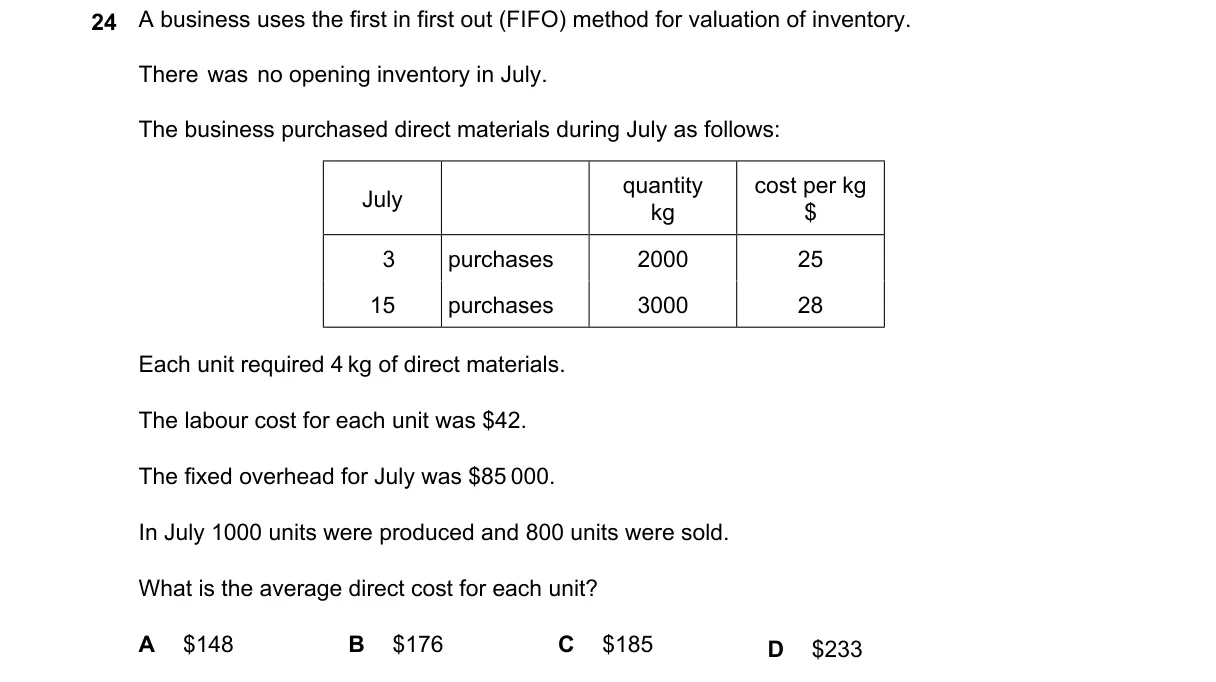
Answer choices
- A$148
- B$176
- C$185
- D$233
Explanation
Unit manufacturing cost using FIFO and absorption costing
Steps:
- Materials used: 1,000 units × 4 kg = 4,000 kg; FIFO cost = (2,000 kg × 28) = 56,000 = 106/unit).
- Direct labor: $42/unit (given for 4 kg/unit).
- Fixed overhead: 0.85/unit.
- Total cost: 42 + 148.85 ≈ $148/unit.
Why A is correct:
- Absorption costing requires allocating direct materials (via FIFO), direct labor, and fixed overhead to units produced, yielding $148/unit.
Why the others are wrong:
- B: Uses total purchased materials (42,000) + overhead (177 ≈ $176, ignoring ending inventory.
- C: Divides total manufacturing cost (186 ≈ $185.
- D: Misplaces decimal in fixed overhead (106 materials + 233.
Final answer: A
Topic: Traditional costing methods
Practice more A Level Accounting (9706) questions on mMCQ.me