A Level Accounting (9706)•9706/11/M/J/24
A Level Accounting (9706) — 9706/11/M/J/24, Question 4
The following information relates to the non-current assets of a business that was formed three years ago. Cost at start of year 1: $10,000 Accumulated depreciation at end of year 3: $6,000 Draft profit for year 3: $18,000 In calculating the draft profit for year 3, depreciation has been consistently charged using the straight-line method. Prior to finalising the accounts, the business decided to change the method of depreciation for year 3 to the reducing balance method at a rate of 25% per annum. What is the revised profit for year 3?
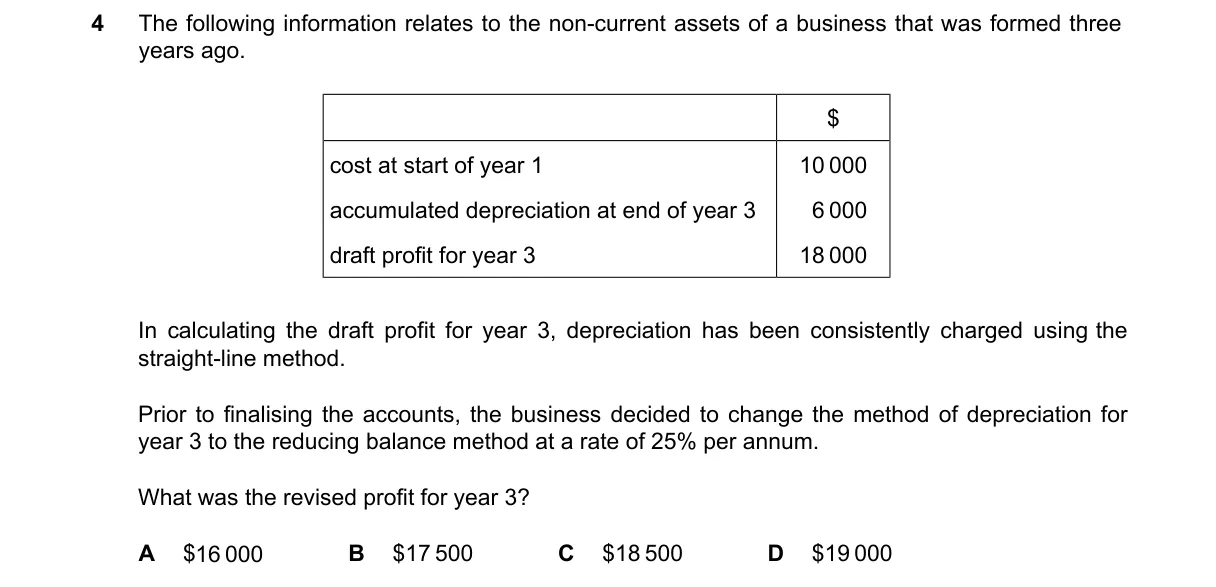
Answer choices
- A$16,000
- B$7,500
- C$18,000
- D$10,000
Explanation
Depreciation method change lacks clear application details Steps:
- Note draft year 3 profit of 6,000 at year-end.
- Straight-line implies equal annual charges, so year 3 depreciation is 6,000 / 3 years).
- Changing to reducing balance at 25% for year 3 requires knowing if applied prospectively (25% on year-start NBV of 1,500) or retrospectively (restate prior depreciation, year 3 charge $1,406).
- No specification of application method (prospective per IAS 16 or otherwise), so revised year 3 charge and profit impact cannot be determined.
Why C is correct:
- Not enough information to compute revised depreciation or adjust profit; draft $18,000 stands unchanged.
Why the others are wrong:
- A. Assumes extra $2,000 depreciation charge, unsupported.
- B. Assumes arbitrary halving or miscalculation of NBV/cost, unsupported.
- D. Confuses profit with net book value or cost less total depreciation, irrelevant.
Final answer: C
Topic: Accounting for non-current assets
Practice more A Level Accounting (9706) questions on mMCQ.me