A Level Accounting (9706)•9706/13/M/J/22
A Level Accounting (9706) — 9706/13/M/J/22, Question 7
The correction of which error would require an entry in the suspense account?
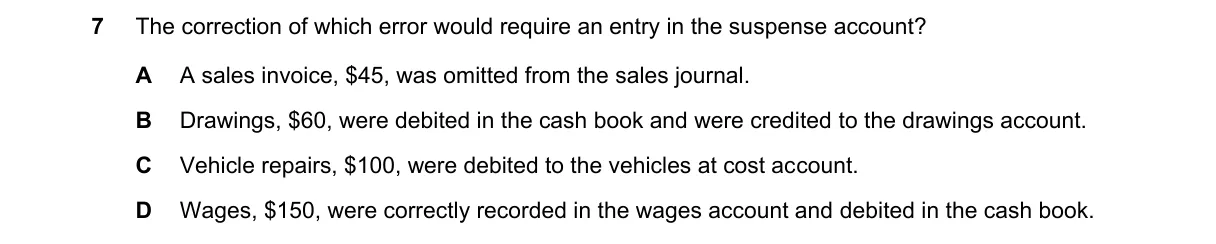
Answer choices
- ASales $45, was omitted from sales journal.
- BDrawings $50, debited in cash book and credited to drawings account.
- CVehicle repairs $100, debited to vehicles cost account.
- DWages $50, were correctly recorded in wages account and debited in cash book.
Explanation
Suspense account corrects trial balance imbalances from one-sided errors
Steps:
- Identify error type in each option: omission, reversal, principle, or partial.
- Check if error causes trial balance discrepancy (debits ≠ credits).
- Determine correction method: two-sided errors balance internally; one-sided need suspense to tally trial balance.
- Select option where only one account is wrongly posted, requiring suspense adjustment.
Why D is correct:
- Suspense account records temporary differences to balance trial balance (per double-entry principle); wages debit is correct, but cash book debit (instead of credit) overstates cash by 100 and crediting cash $100.
Why the others are wrong:
- A: Omission from sales journal skips both debit (receivables) and credit (sales), so trial balance balances; direct correction without suspense.
- B: Full reversal (debit cash, credit drawings instead of opposite) affects both sides equally, so trial balance balances; simple reversal entry corrects it.
- C: Principle error debits expense to asset (both debits), so trial balance balances; transfer entry between accounts without suspense.
Final answer: D
Topic: The accounting system
Practice more A Level Accounting (9706) questions on mMCQ.me