A Level Accounting (9706)•9706/12/M/J/22
A Level Accounting (9706) — 9706/12/M/J/22, Question 3
Paul's year end is 31 January. On 1 January 2020, he bought a non-current asset for $10,000. He sold it on 1 January 2021 for Paul usually provides depreciation at the rate of 10% per annum. A full year's depreciation is charged in the year of acquisition and none in the year of disposal. He forgot to provide for any What is the effect of this error on Paul's profit for the year ended 31 December 2021?
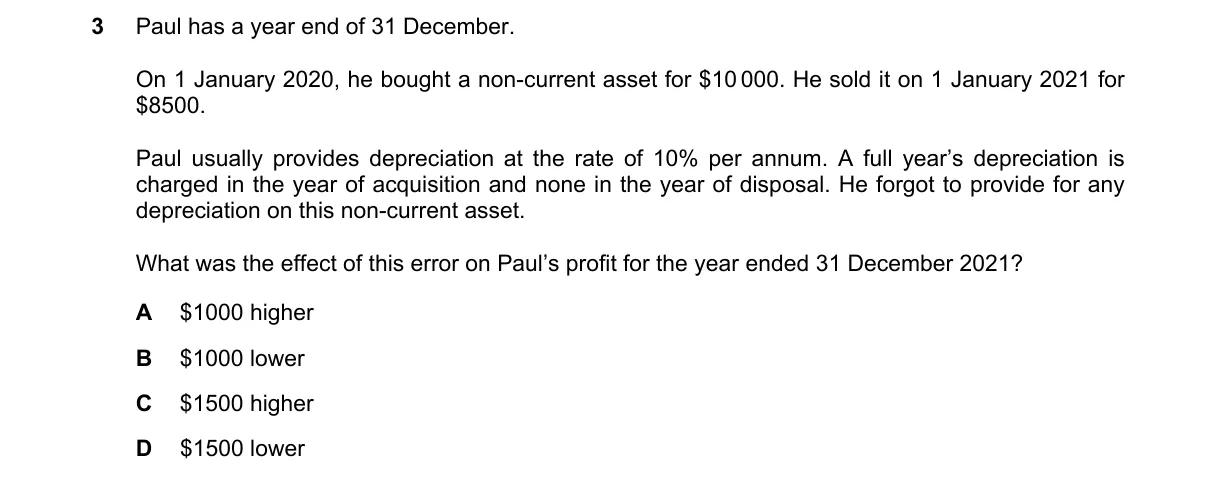
Answer choices
- A$1000 higher
- B$1000 lower
- C$1500 higher
- D$1500 lower
Explanation
Omission of depreciation increases net book value, reducing disposal gain
Steps:
- Asset bought 1 Jan 2020 for 10,000 = $1,000 (full year charged).
- No depreciation recorded in 2020 due to error, so net book value at 31 Dec 2020: 9,000).
- Sold 1 Jan 2021; no 2021 depreciation under policy (disposal year).
- Disposal gain in 2021: sale price minus 9,000 (correct), so $1,000 lower gain.
Why B is correct:
- Per accounting standards (e.g., IAS 16), omitting depreciation expense understates it in acquisition year but overstates net book value at disposal, reducing reported profit on sale by the uncharged amount ($1,000).
Why the others are wrong:
- A: Ignores that higher net book value decreases gain on disposal.
- C: Overstates effect; only one year's depreciation ($1,000) omitted, not 15%.
- D: Reverses the impact; error lowers 2021 profit via reduced disposal gain.
Final answer: B
Topic: Accounting for non-current assets
Practice more A Level Accounting (9706) questions on mMCQ.me