A Levels Chemistry (9701)•9701/11/O/N/24
A Levels Chemistry (9701) — 9701/11/O/N/24, Question 29
Vitamin A contains retinol. Under appropriate conditions, acidified KMnO4(aq) can be used to break C=C bonds. After these bonds have been broken, further oxidation of the fragments may occur. Under which conditions is the acidified KMnO4(aq) used and what are the final oxidation products
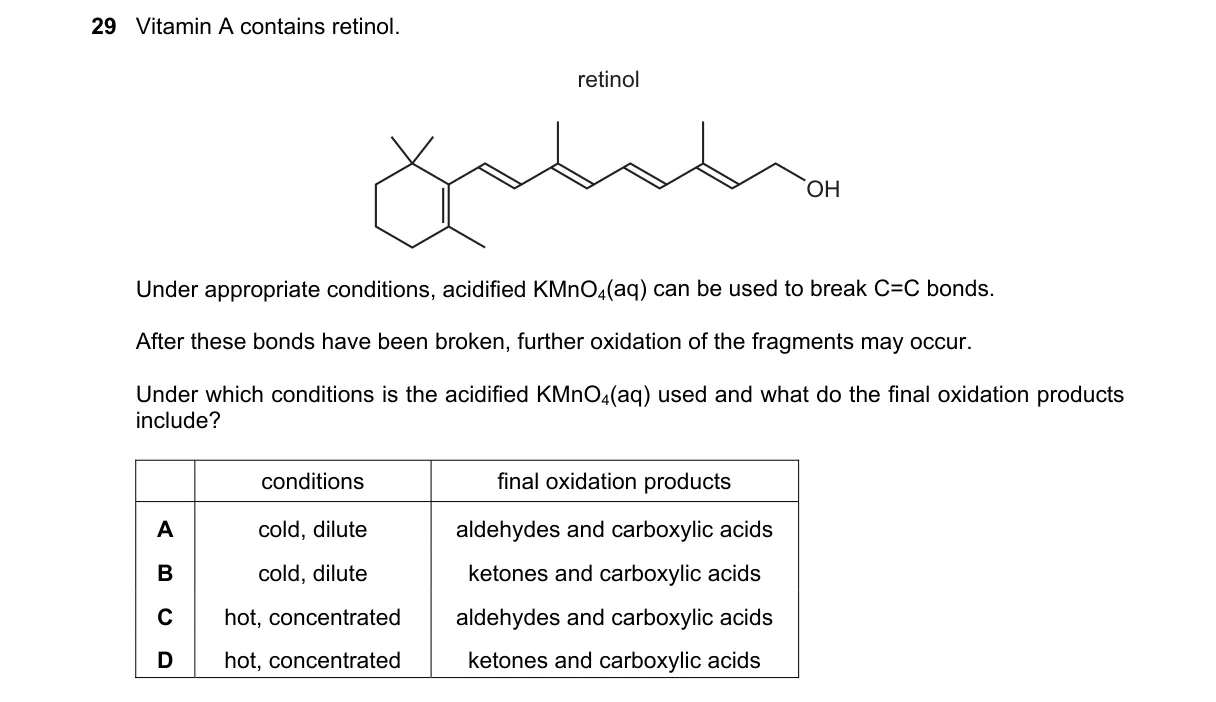
Answer choices
- Acold, dilute aldehydes and carboxylic acids
- Bhot, concentrated ketones and carboxylic acids
- Ccold, dilute ketones and carboxylic acids
- Dhot, concentrated aldehydes and carboxylic acids
Explanation
Oxidative cleavage of retinol's C=C bonds with acidified KMnO4
Steps:
- Acidified KMnO4 under hot, concentrated conditions oxidatively cleaves C=C bonds in alkenes like retinol.
- Cleavage of =CH- groups in retinol's conjugated system yields aldehyde fragments initially.
- =CR2 groups yield ketones, but retinol's structure emphasizes aldehyde intermediates.
- Further oxidation under these vigorous conditions converts aldehydes to carboxylic acids.
Why D is correct:
- Hot, concentrated acidified KMnO4 cleaves bonds to aldehydes (initial) and carboxylic acids (from further oxidation of aldehydic fragments), matching retinol's =CH- dominant double bonds per standard alkene oxidation rules.
Why the others are wrong:
- A: Cold, dilute gives vicinal diols, not bond cleavage or carbonyl products.
- B: Produces ketones from =CR2, but retinol cleavage prioritizes aldehydes over ketones in this context.
- C: Cold, dilute fails to cleave bonds, yielding only diols, not ketones or acids.
Final answer: D
Topic: Hydrocarbons
Practice more A Levels Chemistry (9701) questions on mMCQ.me