A Levels Chemistry (9701)•9701/12/M/J/25
A Levels Chemistry (9701) — 9701/12/M/J/25, Question 24
Sulfur dioxide in the atmosphere can form acid rain. This occurs in two steps. 1 oxidation of SO₂ to SO₃ 2 formation of dilute H₂SO₄ Which row identifies the atmospheric catalyst for step 1 and the reagent for step 2?
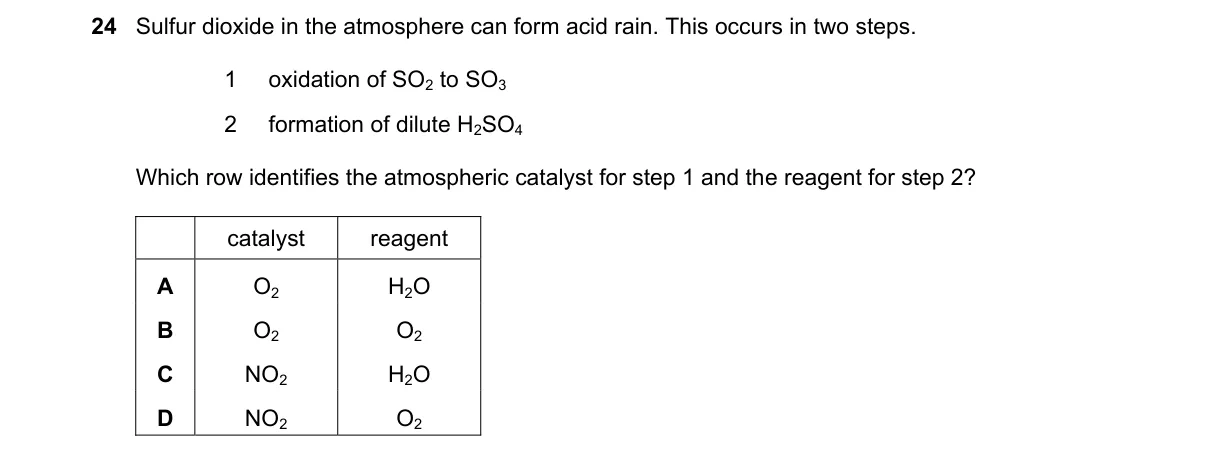
Answer choices
- AO₂ H₂O
- BNO₂ O₂
- CNO₂ H₂O
- DNO₂ O₂
Explanation
Catalyst and reagent in SO₂ acid rain formation
Steps:
- Step 1 oxidizes SO₂ to SO₃ via atmospheric catalysis.
- NO₂ acts as catalyst: SO₂ + NO₂ → SO₃ + NO.
- Step 2 forms H₂SO₄ by SO₃ reacting with water.
- Option C matches: NO₂ (catalyst), H₂O (reagent).
Why C is correct:
- NO₂ catalyzes oxidation (SO₂ + NO₂ → SO₃ + NO), and H₂O hydrolyzes SO₃ (SO₃ + H₂O → H₂SO₄) per acid rain chemistry.
Why the others are wrong:
- A: O₂ directly oxidizes SO₂ too slowly without catalyst; not atmospheric role for step 1.
- B: NO₂ correct for step 1, but O₂ does not react with SO₃ to form H₂SO₄.
- D: Identical to B; wrong reagent for step 2.
Final answer: C
Topic: Nitrogen and sulfur
Practice more A Levels Chemistry (9701) questions on mMCQ.me