A Levels Biology (9700)•9700/13/O/N/24
A Levels Biology (9700) — 9700/13/O/N/24, Question 40
Four steps that occur during primary immune response to a pathogen are listed. P B-lymphocytes divide by mitosis. Q T-helper cells interact with macrophages that have digested pathogens. R Plasma cells secrete antibodies. S T-helper cells activate other lymphocytes. These steps can be arranged in the sequence in which they occur. Which occurs third in the sequence?
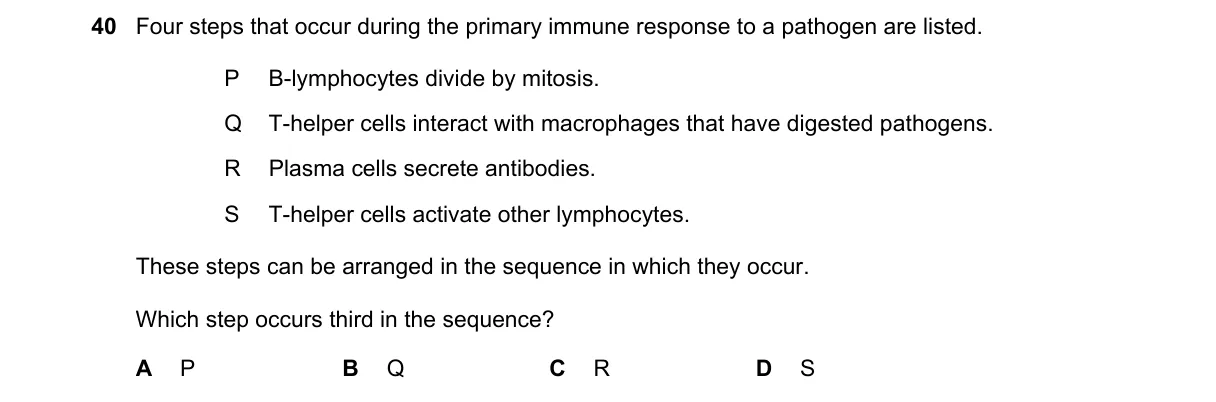
Answer choices
- AP
- BQ
- CR
- DS
Explanation
Sequence of primary immune response steps
Steps:
- Q occurs first: T-helper cells interact with macrophages presenting digested pathogen antigens, activating T-helper cells.
- S occurs second: Activated T-helper cells release cytokines to activate B-lymphocytes and other immune cells.
- P occurs third: Activated B-lymphocytes undergo clonal expansion via mitosis to produce many identical cells.
- R occurs fourth: Some divided B-lymphocytes differentiate into plasma cells that secrete antibodies.
Why A is correct:
- B-lymphocyte division (P) follows T-helper activation of B cells (S) and precedes plasma cell differentiation for antibody production (R), per adaptive immunity clonal selection.
Why the others are wrong:
- B: Q initiates the response by activating T-helper cells via antigen presentation.
- C: R is the final effector step, occurring after B-cell proliferation.
- D: S happens early, as T-helper cells activate lymphocytes post their own activation.
Final answer: A
Topic: The immune system
Practice more A Levels Biology (9700) questions on mMCQ.me