A Levels Biology (9700)•9700/13/O/N/23
A Levels Biology (9700) — 9700/13/O/N/23, Question 37
Bacteria can become resistant to antibiotics. What can help reduce the development of antibiotic resistance in bacteria? 1. Use specific antibiotics instead of broad spectrum. 2. Use antibiotics to treat viral infections. 3. Develop new antibiotics.
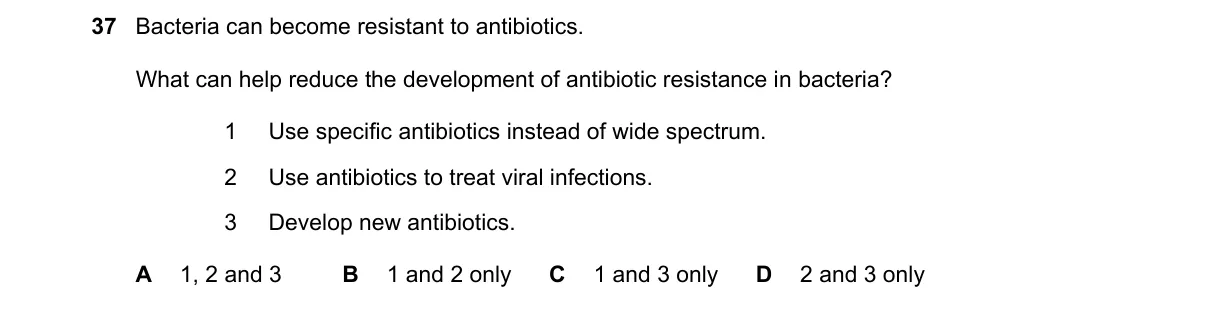
Answer choices
- A1, 2 and 3
- B1 and 2 only
- C1 and 3 only
- D2 and 3 only
Explanation
Targeted Use and Innovation Against Resistance
Steps:
- Identify that antibiotic resistance arises from overuse or misuse, selecting resistant bacteria.
- Assess option 1: Narrow-spectrum antibiotics target only affected bacteria, minimizing exposure of others to selection pressure.
- Assess option 2: Antibiotics ineffective against viruses; their use here accelerates resistance without benefit.
- Assess option 3: New antibiotics expand options, countering evolved resistance strains.
Why C is correct:
- C combines 1 and 3, aligning with antimicrobial stewardship guidelines that emphasize precise prescribing and ongoing R&D to curb resistance evolution.
Why the others are wrong:
- A includes 2, which promotes unnecessary resistance by misapplying antibiotics.
- B includes 2 but omits 3, failing to address innovation needs.
- D includes 2 but omits 1, ignoring targeted therapy benefits.
Final answer: C
Topic: Antibiotics
Practice more A Levels Biology (9700) questions on mMCQ.me