A Levels Biology (9700)•9700/13/O/N/23
A Levels Biology (9700) — 9700/13/O/N/23, Question 26
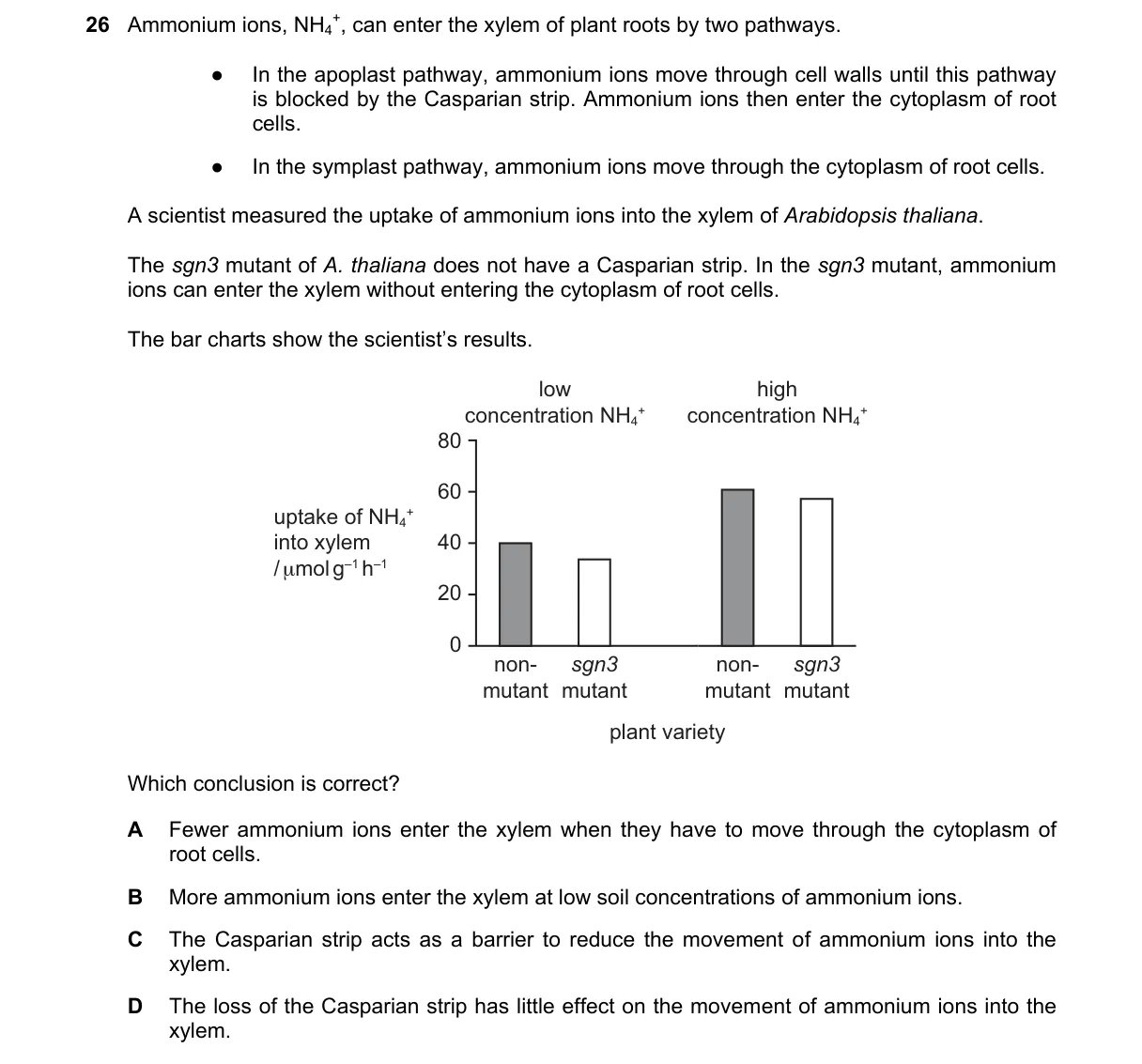
Ammonium ions, NH₄⁺, can enter the xylem of plants by two ways. • In the apoplast pathway, ammonium ions move through cell walls. • In the symplast pathway, ammonium ions move through the cytoplasm of root cells. A scientist measured the uptake of ammonium ions into the xylem of Arabidopsis thaliana. The sgn3 mutant allows ammonium ions to enter the xylem without entering the casparian strip. The bar charts show the scientist's results. low concentration NH₄⁺ high concentration NH₄⁺ uptake of NH₄⁺ / µmol g⁻¹ h⁻¹ non-sgn3 mutant plant sgn3 mutant Which conclusion is correct?
Answer choices
- AFewer ammonium ions enter the xylem when they have to move through the cytoplasm of root cells.
- BMore ammonium ions enter the xylem when they have to move through the cytoplasm of root cells.
- CThe casparian strip acts as a barrier to slow the movement of ammonium ions into the xylem.
- DLoss of the casparian strip has little effect on the movement of ammonium ions into the xylem.
Explanation
Casparian Strip Bypassed in sgn3 Mutant
Steps:
- Casparian strip blocks apoplast pathway, forcing ammonium ions into symplast via cytoplasm.
- sgn3 mutant allows apoplast entry without crossing casparian strip.
- Bar charts compare NH₄⁺ uptake in non-sgn3 (wild-type) and sgn3 plants at low/high concentrations.
- Similar uptake rates in both mutants indicate casparian strip has minimal impact.
Why D is correct:
- Uptake data shows comparable NH₄⁺ movement into xylem with/without casparian strip, confirming little effect from its loss.
Why the others are wrong:
- A: Data shows similar uptake, not reduced when forced through cytoplasm.
- B: Data shows no increase when bypassing cytoplasm via apoplast.
- C: Similar rates mean casparian strip does not slow movement.
Final answer: D
Topic: Transport mechanisms
Practice more A Levels Biology (9700) questions on mMCQ.me