A Levels Biology (9700)•9700/13/O/N/23
A Levels Biology (9700) — 9700/13/O/N/23, Question 21
The transmission electron micrograph shows a cell at a stage of the mitotic cell cycle. Which statement explains why it is difficult to identify the stage of the mitotic cell shown?
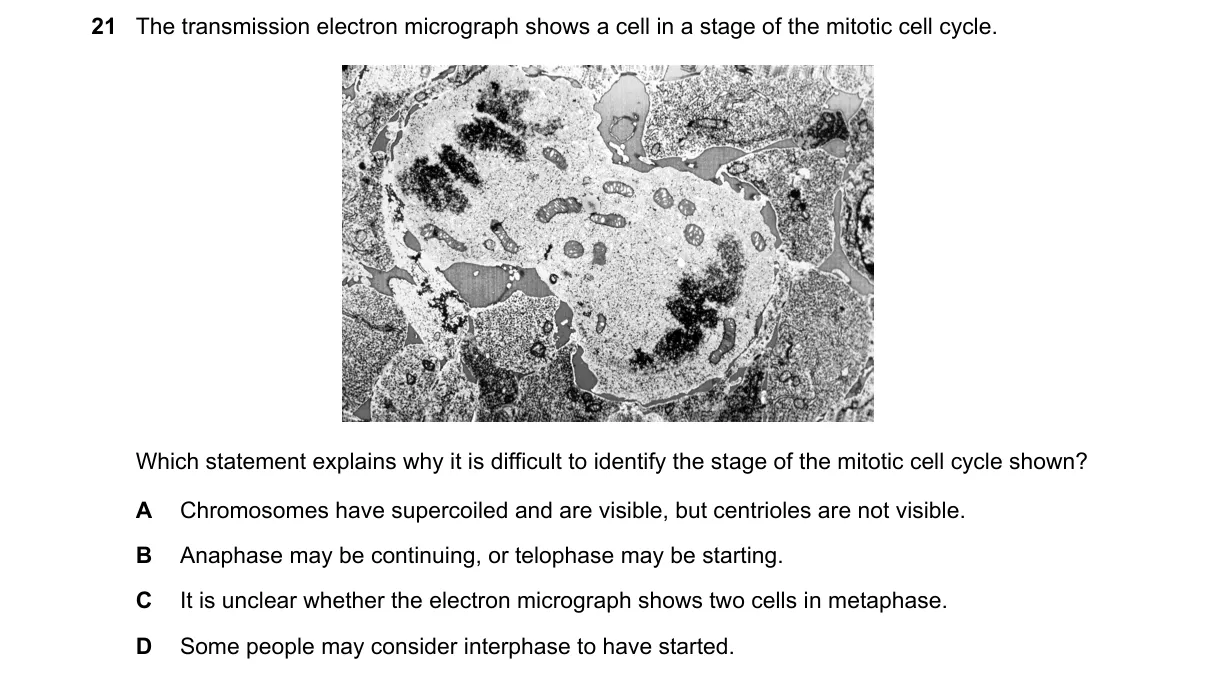
Answer choices
- AChromosomes have supercoiled and are visible, but centrioles are not visible.
- BAnaphase may be continuing, or telophase may be starting.
- CIt is unclear whether the electron micrograph shows two cells in metaphase.
- DSome people may consider interphase to have started.
Explanation
Overlap in late mitosis stages
Steps:
- Anaphase separates sister chromatids toward spindle poles.
- Telophase begins when chromosomes arrive at poles and nuclear envelopes start reforming.
- Electron micrographs capture continuous processes, blurring boundaries between these stages.
- Features like decondensing chromosomes appear in both, making precise identification challenging.
Why B is correct:
- Anaphase and telophase definitions overlap in chromatid positioning and envelope reformation timing, per mitotic cycle descriptions.
Why the others are wrong:
- A: Supercoiling and centriole visibility aid identification, not hinder it.
- C: The image shows one cell, not ambiguity about multiple metaphase cells.
- D: Interphase follows cytokinesis, irrelevant to mitotic stage distinction.
Final answer: B
Topic: Chromosome behaviour in mitosis
Practice more A Levels Biology (9700) questions on mMCQ.me