A Levels Biology (9700)•9700/12/O/N/23
A Levels Biology (9700) — 9700/12/O/N/23, Question 38
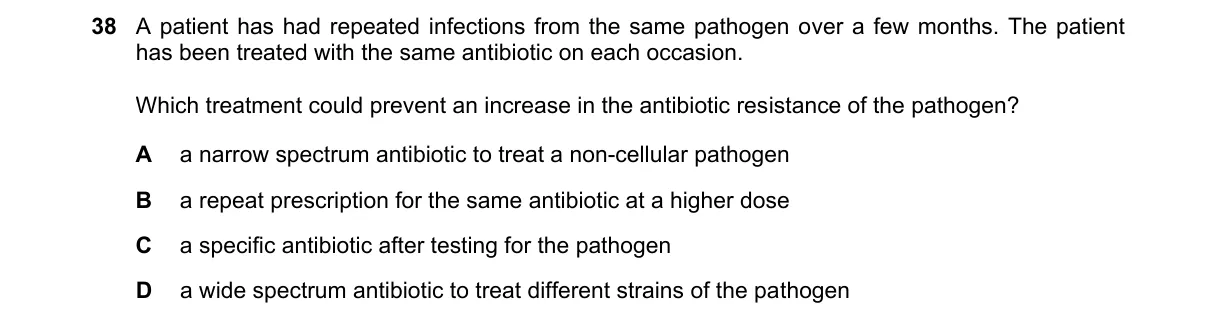
A patient has repeated infections from the same pathogen over a few months. The patient has been treated with the same antibiotic on each occasion. Which treatment could prevent an increase in antibiotic resistance?
Answer choices
- Aa narrow spectrum antibiotic to treat a non-cellular resistance of the pathogen
- Brepeat prescription for the same antibiotic at a higher dose
- Ca specific antibiotic after testing for the pathogen
- Da broad spectrum antibiotic to treat different strains of the pathogen
Explanation
Targeted Antibiotic Selection Prevents Resistance
Steps:
- Recognize repeated same-antibiotic use selects for resistant pathogen variants.
- Identify need to confirm pathogen identity and susceptibility to avoid misuse.
- Evaluate options for minimizing selective pressure on the pathogen.
- Select approach using testing to guide precise treatment.
Why C is correct:
- Antibiotic susceptibility testing identifies the effective drug, reducing unnecessary exposure that drives resistance per principles of antimicrobial stewardship.
Why the others are wrong:
- A: "Non-cellular resistance" is invalid; narrow spectrum alone doesn't address confirmed susceptibility.
- B: Higher doses of the same antibiotic intensify selective pressure, accelerating resistance evolution.
- D: Broad spectrum targets multiple strains unnecessarily, promoting resistance in non-target microbes.
Final answer: C
Topic: Antibiotics
Practice more A Levels Biology (9700) questions on mMCQ.me