A Levels Biology (9700)•9700/12/O/N/23
A Levels Biology (9700) — 9700/12/O/N/23, Question 36
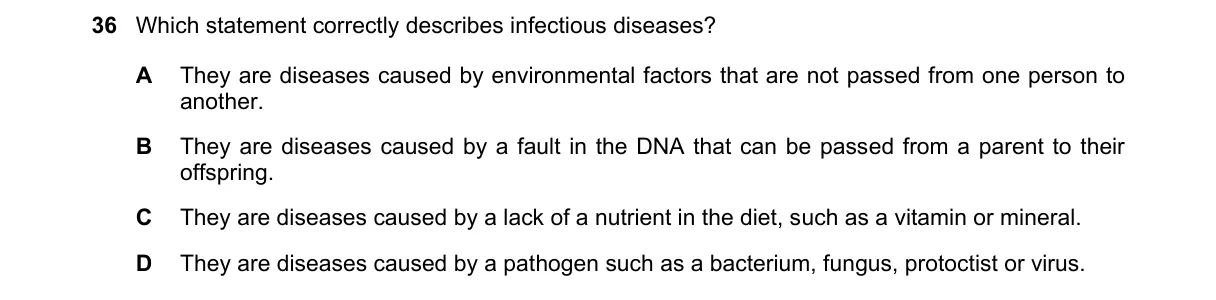
Which statement correctly describes infectious diseases
Answer choices
- AThey are diseases that are not passed from one person to another.
- BThey are diseases caused by a fault in the DNA that can be passed from a parent to their offspring.
- CThey are diseases caused by a lack of a nutrient in the diet, such as a vitamin or mineral.
- DThey are diseases caused by a pathogen such as bacteria, fungus, protoctist or virus.
Explanation
Defining Infectious Diseases
Steps:
- Recall that infectious diseases involve transmission between organisms.
- Identify key causes: pathogens like bacteria, fungi, protoctists, or viruses.
- Eliminate options describing non-transmissible or non-pathogen causes.
- Match the definition to option D.
Why D is correct:
- Infectious diseases are defined as those caused by pathogens (bacteria, fungi, protoctists, viruses) that invade the body and can spread.
Why the others are wrong:
- A describes non-communicable diseases, which do not spread person-to-person.
- B describes genetic disorders, inherited via DNA mutations.
- C describes deficiency diseases, resulting from nutritional shortages like vitamin lacks.
Final answer: D
Topic: Infectious diseases
Practice more A Levels Biology (9700) questions on mMCQ.me