A Levels Biology (9700)•9700/13/O/N/22
A Levels Biology (9700) — 9700/13/O/N/22, Question 17
A student weighed a cylinder of potato and then put it into a test tube containing a salt solution. The potato cylinder was removed from the salt solution after one hour. It was blotted dry and then weighed. The student recorded that the potato had lost weight. Which row shows the correct explanation for the results the student collected?
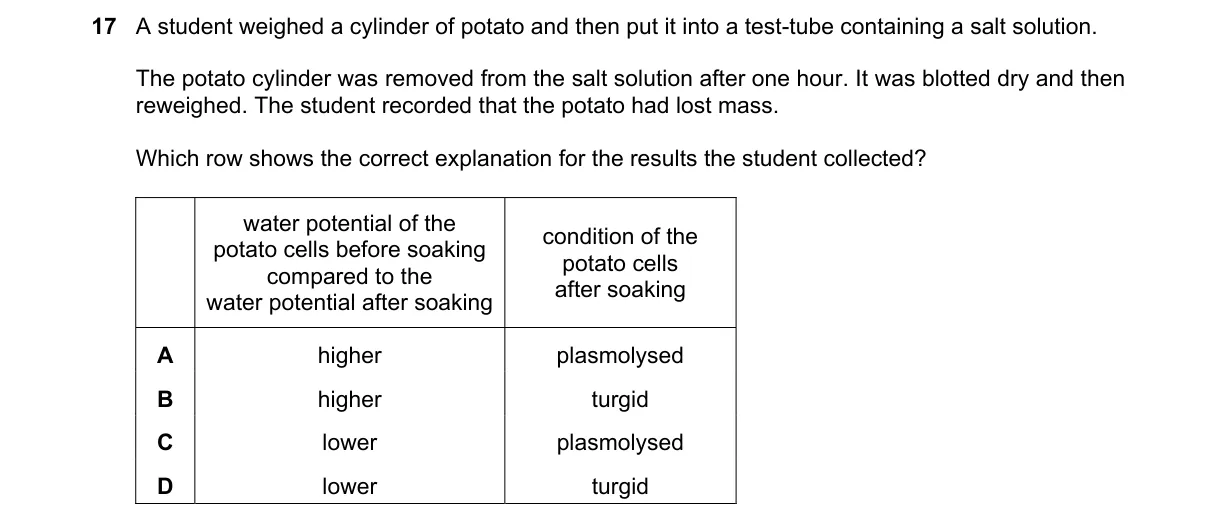
Answer choices
- Ahigher plasmolysed
- Blower turgid
- Chigher plasmolysed
- Dlower turgid
Explanation
Osmosis in hypertonic solution causes water loss and plasmolysis
Steps:
- Potato cylinder loses weight after immersion in salt solution, indicating net water loss from cells.
- Osmosis drives water movement from higher water potential (potato cells) to lower water potential (salt solution).
- Salt solution has higher solute concentration, making it hypertonic relative to potato cells.
- Water exits cells, leading to plasmolysis where cytoplasm shrinks from cell walls.
Why A is correct:
- Plasmolysis occurs in hypertonic solutions with higher solute concentration, matching water loss as cells lose turgor and volume.
Why the others are wrong:
- B: Lower solute concentration (hypotonic) causes water influx, making cells turgid and gaining weight.
- C: Duplicate of A, but if misinterpreted as non-plasmolysed state, it fails to explain water loss.
- D: Lower concentration leads to turgor, not weight loss, as water enters cells.
Final answer: A
Topic: Movement into and out of cells
Practice more A Levels Biology (9700) questions on mMCQ.me