A Levels Biology (9700)•9700/12/O/N/21
A Levels Biology (9700) — 9700/12/O/N/21, Question 38
Comorbidity is where an individual has two or more diseases or medical conditions at the same time. Some medical conditions are particularly likely to result in comorbidity. In one example, a first infection with a pathogen can increase the risk of developing a second disease that increases the risk of death by a factor of 15 or more than the major cause of death for these people. The second disease is then likely to result in comorbidity. Which description could fit this example?
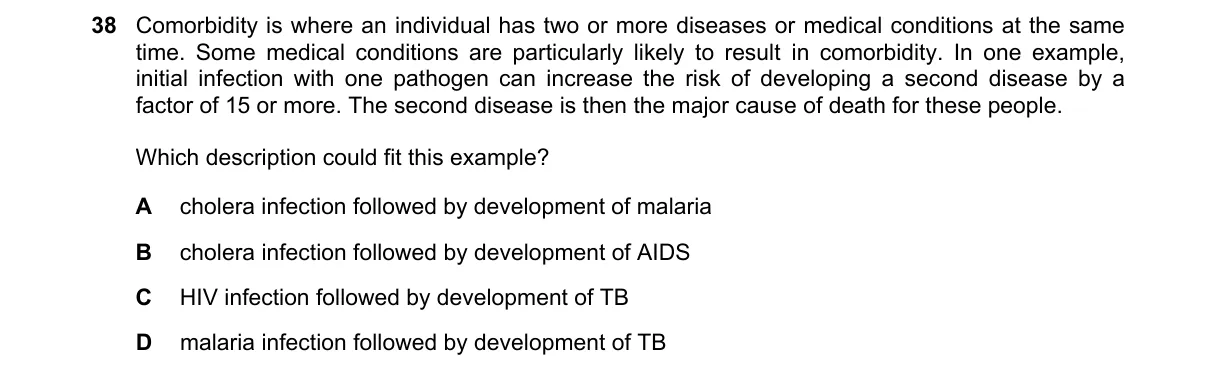
Answer choices
- Acholera infection followed by development of AIDS
- BHIV infection followed by development of TB
- CTB infection followed by development of AIDS
- Dmalaria infection followed by development of TB
Explanation
HIV-TB Comorbidity Risk Steps:
- Identify the first infection as one that impairs immunity, increasing susceptibility to a second opportunistic disease.
- Note the second disease must amplify death risk by 15x or more compared to primary causes in affected groups.
- Recall HIV weakens the immune system, heightening TB risk dramatically in endemic areas.
- Confirm TB as a major killer in HIV patients, fitting the comorbidity pattern.
Why B is correct:
- HIV infection increases TB risk by 15-20 times; TB then raises mortality in HIV patients far beyond other causes, per WHO data on AIDS-related deaths.
Why the others are wrong:
- A: Cholera causes dehydration but does not lead to AIDS or similar comorbidity.
- C: TB does not cause AIDS; HIV causes AIDS, reversing the sequence.
- D: Malaria may co-occur with TB but lacks evidence of 15x mortality increase from TB post-malaria.
Final answer: B
Topic: Infectious diseases
Practice more A Levels Biology (9700) questions on mMCQ.me