A Levels Biology (9700)•9700/13/O/N/20
A Levels Biology (9700) — 9700/13/O/N/20, Question 38
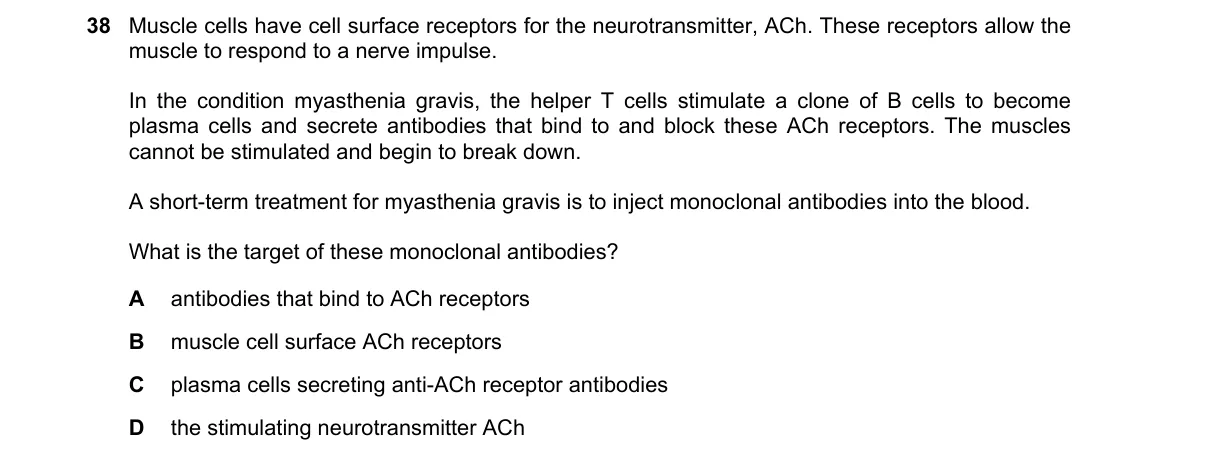
Muscle cells have cell surface receptors for the neurotransmitter, ACh. These receptors allow muscle cells to respond to a nerve impulse. In the condition myasthenia gravis, helper T cells stimulate a clone of B cells and secrete antibodies that bind to and block ACh receptors. The plasma cells secrete antibodies that bind to block ACh receptors. The muscles cannot respond to the stimulating neurotransmitter ACh. A short-term treatment for myasthenia gravis is to inject monoclonal antibodies into the blood. What are the target of these monoclonal antibodies?
Answer choices
- Aantibodies that bind to ACh receptors
- Bmuscle cell surface ACh receptors antibodies
- COption C
- Dplasma cells secreting anti ACh antibodies
Explanation
Monoclonal Antibodies Neutralize Pathogenic Autoantibodies
Steps:
- Identify the problem: In myasthenia gravis, autoantibodies bind and block ACh receptors on muscle cells, impairing nerve signaling.
- Determine treatment goal: Short-term injection must rapidly reduce circulating autoantibodies to restore receptor function.
- Infer monoclonal antibody role: These lab-produced antibodies specifically target and bind to the harmful autoantibodies for clearance.
- Conclude target: The monoclonal antibodies bind the disease-causing antibodies, not the receptors or cells directly.
Why A is correct:
- Monoclonal antibodies are engineered to specifically recognize and neutralize pathogenic immunoglobulins, as defined in immunotherapy protocols for autoimmune diseases like myasthenia gravis.
Why the others are wrong:
- B: Targeting ACh receptors would block them further, exacerbating muscle weakness.
- C: No option provided, so invalid.
- D: Plasma cells produce antibodies long-term; short-term treatment focuses on circulating antibodies, not depleting producers.
Final answer: A
Topic: The immune system
Practice more A Levels Biology (9700) questions on mMCQ.me