A Levels Biology (9700)•9700/12/O/N/20
A Levels Biology (9700) — 9700/12/O/N/20, Question 36
An earthquake caused damage to water systems in a tropical village. Drinking water became contaminated with sewage. A large tropical rain caused flooding and left large pools of water in the village. Housing was destroyed and people in the village had to live in very overcrowded conditions. Which infectious diseases could increase in the village population as a result of the earthquake and heavy rain?
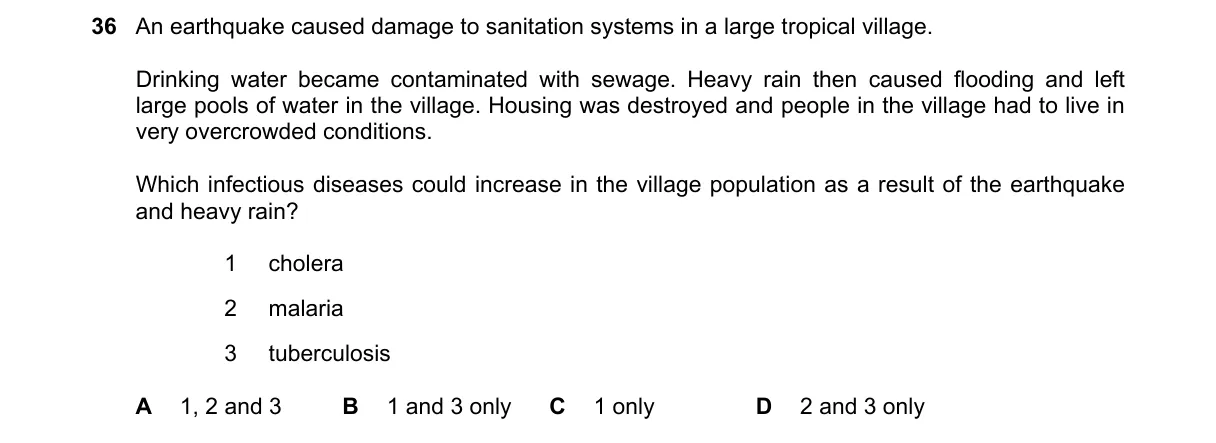
Answer choices
- A1, 2 and 3
- B1 and 3 only
- C1 only
- D2 and 3 only
Explanation
Post-disaster conditions promote waterborne, vector-borne, and respiratory infections
Steps:
- Identify risks: Sewage contamination spreads waterborne diseases like cholera (disease 1).
- Note flooding: Stagnant pools breed mosquitoes, increasing vector-borne diseases like malaria (disease 2).
- Consider overcrowding: Close quarters facilitate respiratory infections like measles (disease 3).
- Conclude all three diseases rise due to combined environmental and social disruptions.
Why A is correct:
- Earthquake and rain create ideal conditions for all three disease types, as defined by WHO post-disaster epidemiology linking contamination, vectors, and crowding to outbreaks.
Why the others are wrong:
- B: Excludes malaria, but flooding directly boosts mosquito populations.
- C: Ignores malaria and measles, both amplified by water pools and crowding.
- D: Omits cholera, despite clear sewage-water contamination pathway.
Final answer: A
Topic: Infectious diseases
Practice more A Levels Biology (9700) questions on mMCQ.me