A Levels Biology (9700)•9700/11/O/N/19
A Levels Biology (9700) — 9700/11/O/N/19, Question 32
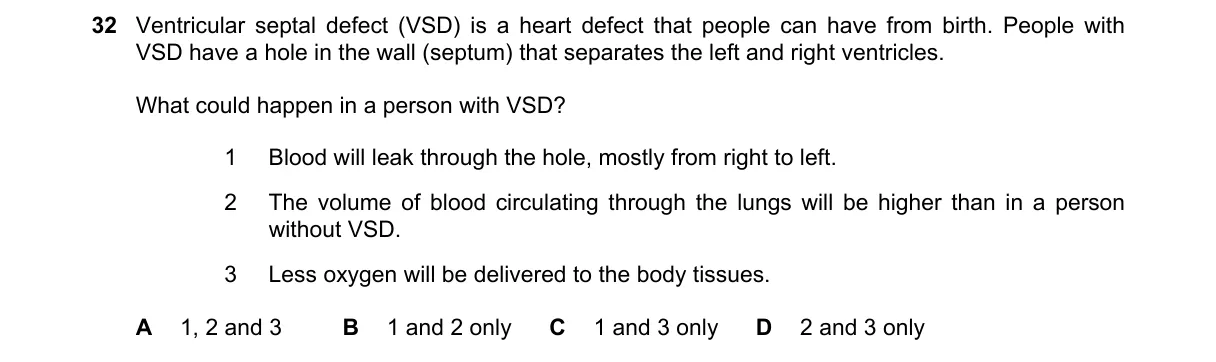
Ventricular septal defect (VSD) is a heart defect that people can have from birth. People with VSD have a hole in the wall (septum) that separates the left and right ventricles. What will happen in a person with VSD?
Answer choices
- A1, 2 and 3
- B1 and 2 only
- C1 and 3 only
- D2 and 3 only
Explanation
Blood Flow Dynamics in VSD Steps:
- VSD creates a hole between left and right ventricles, allowing blood to shunt based on pressure differences.
- Left ventricle pressure exceeds right ventricle pressure, causing left-to-right shunt of oxygenated blood.
- This mixes oxygen-rich blood into the right ventricle, increasing pulmonary blood flow.
- Right-to-left shunt does not occur initially, preventing early cyanosis.
Why D is correct:
- D (2 and 3 only) aligns with VSD physiology: oxygen-rich blood mixes with oxygen-poor blood (2), and extra blood increases lung flow (3), per pressure gradient laws in congenital heart defects.
Why the others are wrong:
- A includes 1 (right-to-left shunt), which is incorrect as flow is left-to-right.
- B includes 1 but excludes 3, missing the pulmonary overcirculation effect.
- C excludes 2, ignoring the mixing of oxygenated blood into the right side.
Final answer: D
Topic: The heart
Practice more A Levels Biology (9700) questions on mMCQ.me