A Levels Biology (9700)•9700/13/O/N/18
A Levels Biology (9700) — 9700/13/O/N/18, Question 40
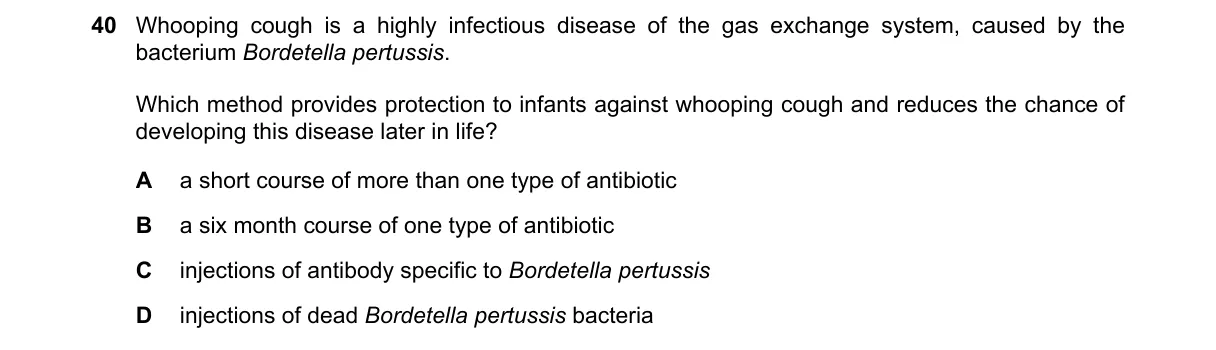
Whooping cough is a highly infectious disease of the gas exchange system, caused by Bordetella pertussis bacteria. Which method provides protection to infants against whooping cough and reduces the chance of developing this disease later in life?
Answer choices
- Aa short course of more than one type of antibiotic
- Ba six month course of one type of antibiotic
- Cinjections of dead Bordetella pertussis bacteria
- Dinjections of Bordetella pertussis bacteria
Explanation
Vaccination prevents whooping cough in infants Steps:
- Identify the goal: protect infants from infection and reduce future risk, pointing to immunization, not treatment.
- Eliminate antibiotics (A, B): they treat active infections but don't prevent disease in unexposed infants.
- Compare vaccine types: whooping cough vaccines use inactivated (dead) bacteria to safely stimulate immunity without causing illness.
- Select C: dead bacteria provide antigens for immune response, conferring long-term protection.
Why C is correct:
- Inactivated vaccines, like the whole-cell pertussis vaccine, introduce dead Bordetella pertussis to trigger antibody production without infection, per vaccine immunology principles.
Why the others are wrong:
- A: Antibiotics treat symptoms post-infection but offer no preventive immunity.
- B: Prolonged antibiotics suppress bacteria temporarily but don't build lasting immune memory.
- D: Live bacteria injections would cause the disease, not protect against it.
Final answer: C
Topic: Antibodies and vaccination
Practice more A Levels Biology (9700) questions on mMCQ.me