A Levels Biology (9700)•9700/13/O/N/18
A Levels Biology (9700) — 9700/13/O/N/18, Question 21
Centromeres, chromatids and telomeres are parts of chromosomes in eukaryotic cells. Which row correctly describes these structures
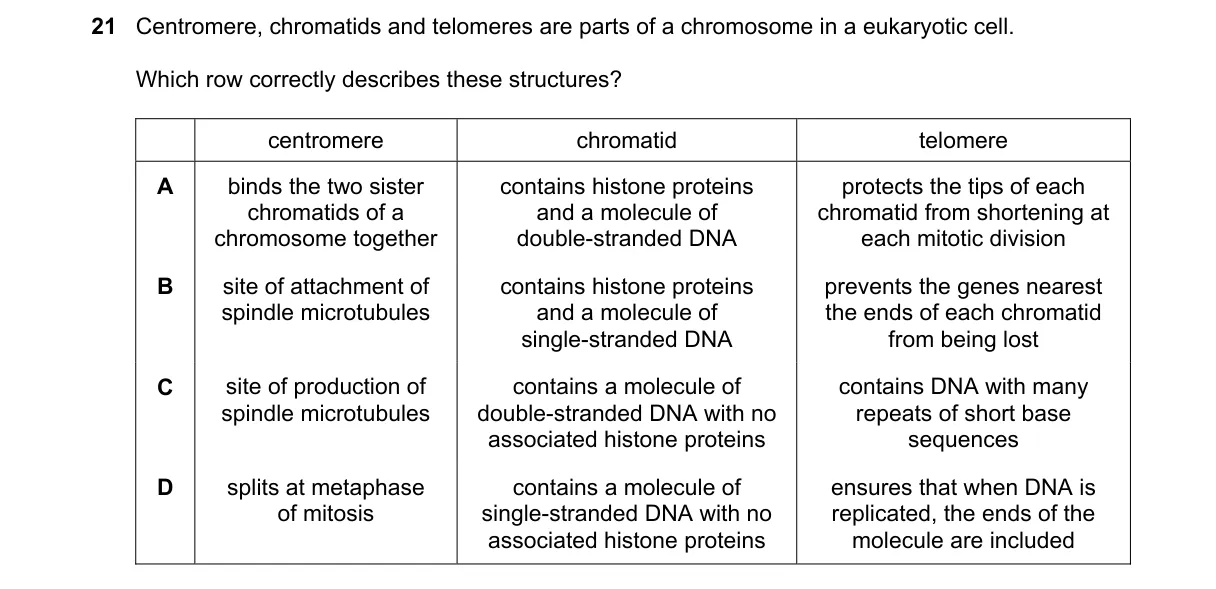
Answer choices
- Abinds the two sister chromatids together | contains histone proteins double-stranded DNA with no | protects the end of each chromosome from shortening
- Bsite of attachment of spindle microtubules | double-stranded DNA with single-stranded DNA | prevents the genes nearest the ends of each chromosome
- Csite of production of double-stranded DNA | double-stranded DNA contains histone proteins no | contains DNA with repeats based on
- Dsplits at metaphase of mitosis | single-stranded DNA with no associated histone proteins | ensures that the ends of the molecule are included
Explanation
Matching chromosome structures to their functions
Steps:
- Define centromere as the region binding sister chromatids and attaching to spindle fibers during mitosis.
- Define chromatid as a replicated chromosome arm consisting of double-stranded DNA wrapped around histone proteins.
- Define telomere as repetitive DNA sequences at chromosome ends that protect against shortening and degradation.
- Compare definitions to options, identifying A as the only match for all three structures.
Why A is correct:
- Centromere binds sister chromatids (per mitosis definition), chromatids contain histone-bound double-stranded DNA (per chromatin structure), and telomeres prevent end shortening (per telomere function in replication).
Why the others are wrong:
- B: Chromatids are double-stranded with histones, not single-stranded; telomeres protect ends, not just nearest genes.
- C: Centromeres do not produce DNA; telomeres contain repetitive sequences, not undefined "based on."
- D: Centromeres split at anaphase, not metaphase; chromatids are double-stranded with histones, not single-stranded.
Final answer: A
Topic: Chromosome behaviour in mitosis
Practice more A Levels Biology (9700) questions on mMCQ.me