A Levels Biology (9700)•9700/12/O/N/18
A Levels Biology (9700) — 9700/12/O/N/18, Question 40
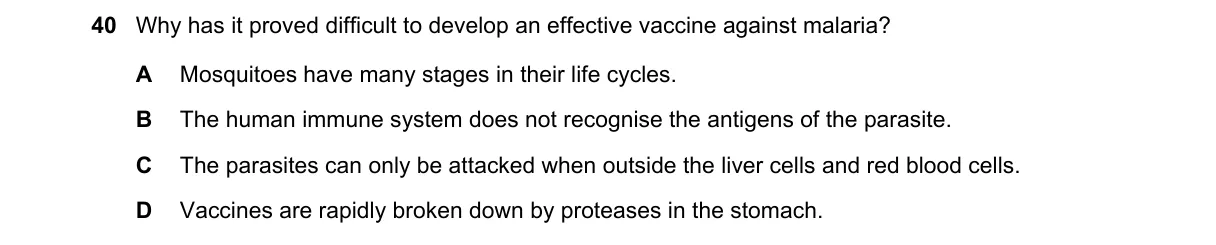
Why has it proved difficult to develop an effective vaccine against malaria
Answer choices
- AMosquitoes have many stages in their life cycle.
- BThe human immune system does not recognise the antigens of the parasite
- CThe parasites can only be attacked when outside the liver cells and red blood cells.
- DVaccines are rapidly broken down by proteases in the stomach.
Explanation
Malaria Parasite Evades Immunity by Hiding Intracellularly
Steps:
- Identify the Plasmodium life cycle: sporozoites invade liver cells, multiply, then infect red blood cells (RBCs).
- Recognize immune challenge: antibodies target extracellular parasites, but most stages hide inside host cells.
- Evaluate vaccine targets: effective vaccines need to hit pre-erythrocytic (liver) or erythrocytic (RBC) stages, but intracellular hiding limits access.
- Conclude difficulty: parasites are shielded from immune attack during key replication phases.
Why C is correct:
- Plasmodium spends critical stages inside liver cells and RBCs, evading humoral immunity per immunological principles of cellular invasion and antigen sequestration.
Why the others are wrong:
- A: Mosquito life cycle affects transmission, not human vaccine efficacy.
- B: The immune system recognizes parasite antigens, but evasion occurs via antigenic variation and hiding.
- D: Malaria vaccines are injected, bypassing stomach proteases.
Final answer: C
Topic: Antibodies and vaccination
Practice more A Levels Biology (9700) questions on mMCQ.me