A Levels Biology (9700)•9700/12/O/N/18
A Levels Biology (9700) — 9700/12/O/N/18, Question 37
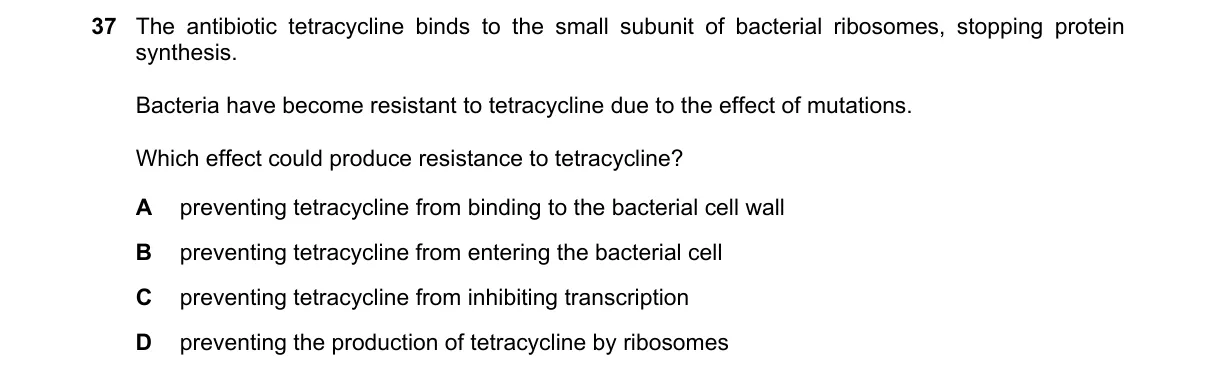
The antibiotic tetracycline binds to the small subunit of bacterial ribosomes, stopping protein synthesis. Bacteria have become resistant to tetracycline due to the effect of mutations. Which effect could produce resistance to tetracycline?
Answer choices
- Apreventing tetracycline from binding to the bacterial cell wall
- Bpreventing tetracycline from entering the bacterial cell
- Cpreventing tetracycline from inhibiting transcription
- Dpreventing the production of tetracycline by ribosomes
Explanation
Bacterial Resistance via Impaired Antibiotic Entry
Steps:
- Tetracycline inhibits protein synthesis by binding the 30S ribosomal subunit inside bacterial cells.
- Mutations can confer resistance by altering drug uptake, target binding, or efflux.
- Resistance requires blocking the antibiotic's access to its intracellular target (ribosomes).
- Evaluate choices: only impaired entry prevents the drug from reaching ribosomes.
Why B is correct:
- Tetracycline acts intracellularly on ribosomes; preventing entry blocks access to the target site, per antibiotic pharmacodynamics.
Why the others are wrong:
- A: Tetracycline targets ribosomes, not the cell wall, so binding there is irrelevant.
- C: Tetracycline inhibits translation (protein synthesis), not transcription (RNA synthesis).
- D: Ribosomes synthesize proteins, not antibiotics like tetracycline; this misrepresents the mechanism.
Final answer: B
Topic: Antibiotics
Practice more A Levels Biology (9700) questions on mMCQ.me