A Levels Biology (9700)•9700/11/O/N/18
A Levels Biology (9700) — 9700/11/O/N/18, Question 38
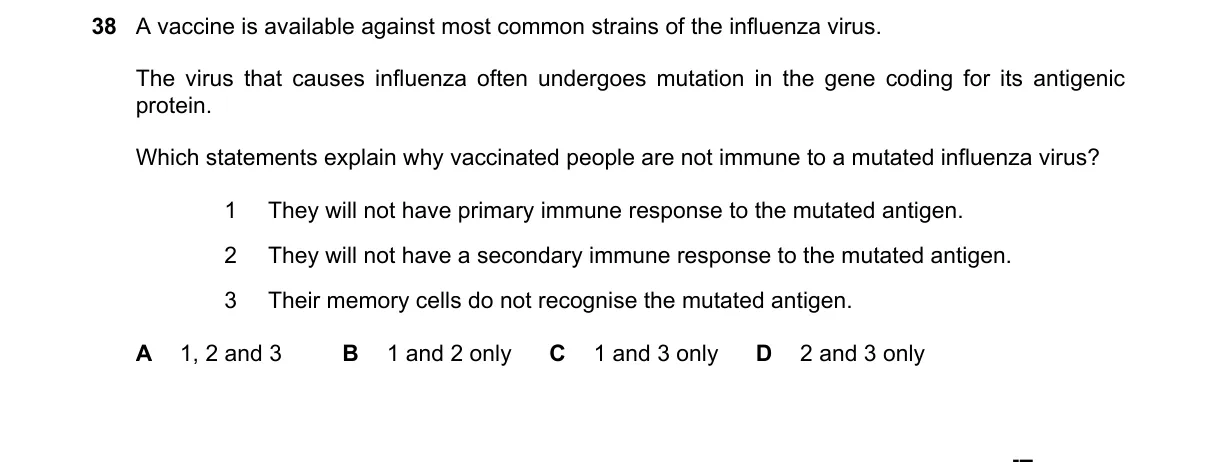
A vaccine is available against most common strains of influenza virus. The virus that causes influenza often undergoes mutation in the gene coding for its antigenic protein. Which statements explain why vaccinated individuals are not immune to a mutated influenza virus? 1 They will not have primary immune response to the mutated antigen. 2 They will not have secondary immune response to the mutated antigen. 3 Their memory cells do not recognise the mutated antigen.
Answer choices
- A1, 2 and 3
- B1 and 2
- C1 and 3 only
- D2 and 3 only
Explanation
Immune Memory Fails on Mutated Antigens
Steps:
- Vaccination creates memory B and T cells specific to the original influenza antigen.
- Viral mutation alters the antigen, making it unrecognizable to these memory cells (statement 3).
- Without recognition, no rapid secondary immune response occurs (statement 2).
- The mutated antigen acts as novel, triggering a slower primary immune response (statement 1 false).
Why D is correct:
- Immunological memory requires antigen specificity; mutations change epitopes, blocking secondary response recall as defined in adaptive immunity.
Why the others are wrong:
- A: Includes 1, but primary response occurs to new antigens.
- B: Includes 1 (false) and omits 3 (memory non-recognition).
- C: Includes 1, which incorrectly denies primary response capability.
Final answer: D
Topic: Antibodies and vaccination
Practice more A Levels Biology (9700) questions on mMCQ.me