A Levels Biology (9700)•9700/11/O/N/18
A Levels Biology (9700) — 9700/11/O/N/18, Question 15
Which identifies the role of this glycoprotein and regions P and Q of the molecule?
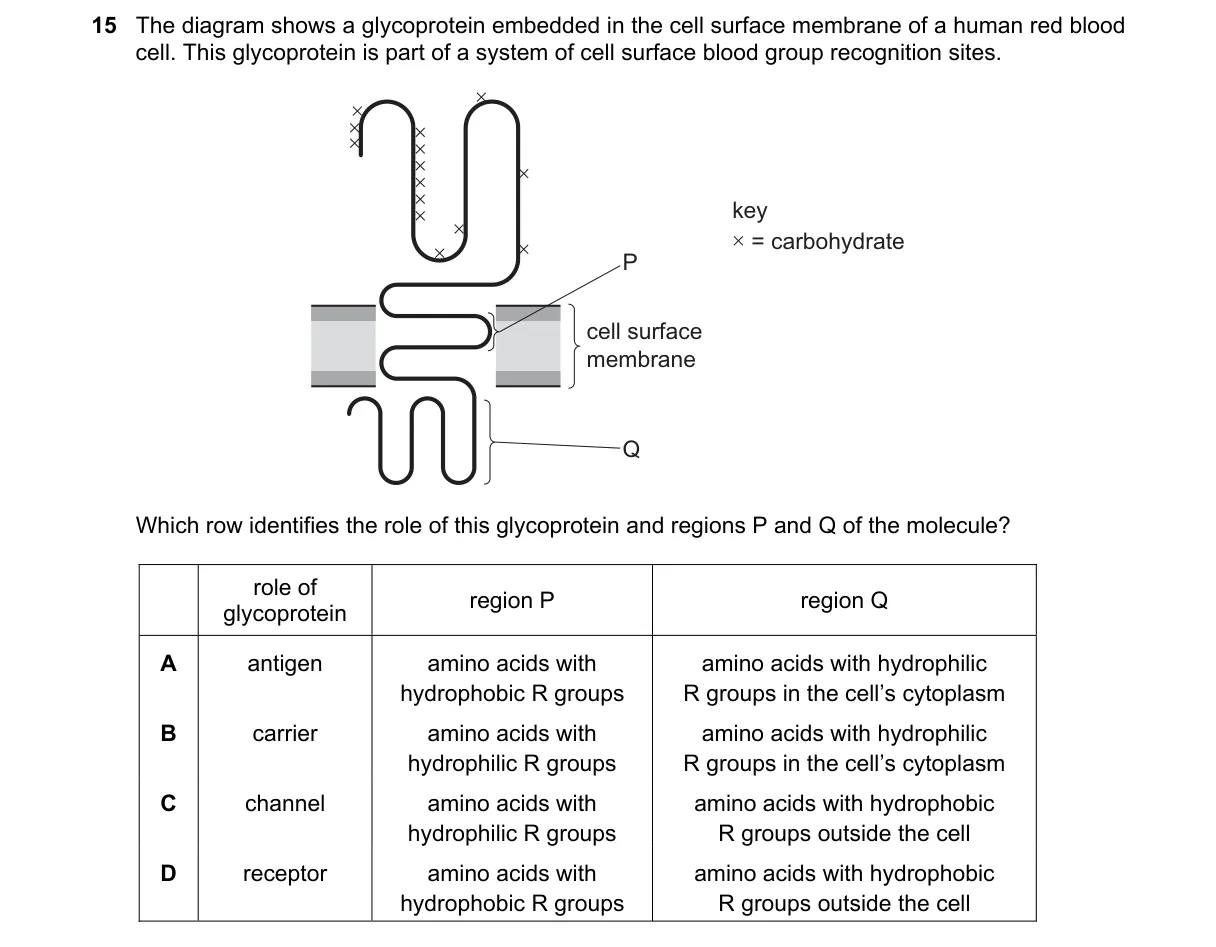
Answer choices
- Aantigen hydrophobic R groups R groups in the cell's cytoplasm
- Bcarrier hydrophobic R groups R groups in the cell's cytoplasm
- Cchannel hydrophobic R groups R groups outside the cell
- Dreceptor hydrophobic R groups R groups outside the cell
Explanation
Glycoproteins as cell surface antigens with internal hydrophobic domains
Steps:
- Identify glycoprotein function: serves as antigen for immune recognition via extracellular carbohydrate chains.
- Examine structure: membrane glycoproteins have hydrophilic exterior for antigen display and hydrophobic interior regions for membrane anchoring.
- Analyze regions P and Q: labeled with hydrophobic R groups, indicating transmembrane or cytoplasmic domains.
- Match to choices: antigen role fits, with hydrophobic groups in cytoplasm for stability.
Why A is correct:
- Glycoproteins function as antigens by exposing unique oligosaccharides outside the cell, while hydrophobic R groups in transmembrane/cytoplasmic regions anchor the molecule per membrane protein topology.
Why the others are wrong:
- B: Carriers transport ions/molecules across membranes, not primarily immune identifiers.
- C: Channels form pores for passage, with hydrophobic regions in membrane but hydrophilic lining outside.
- D: Receptors bind extracellular signals, placing hydrophobic R groups in cytoplasm but mismatching antigen role.
Final answer: A
Topic: Fluid mosaic membranes
Practice more A Levels Biology (9700) questions on mMCQ.me