A Levels Biology (9700)•9700/14/M/J/25
A Levels Biology (9700) — 9700/14/M/J/25, Question 40
Some ways in which different types of monoclonal antibodies can be described. 1 binding to proteins on cell surfaces and triggering the immune system. 2 blocking molecules on cell surfaces that inhibit T-cells. 3 blocking cell signaling receptors that trigger the immune. 4 binding molecules on cell surfaces that inhibit the immune system. Which types of monoclonal antibody could be used to treat cancer?
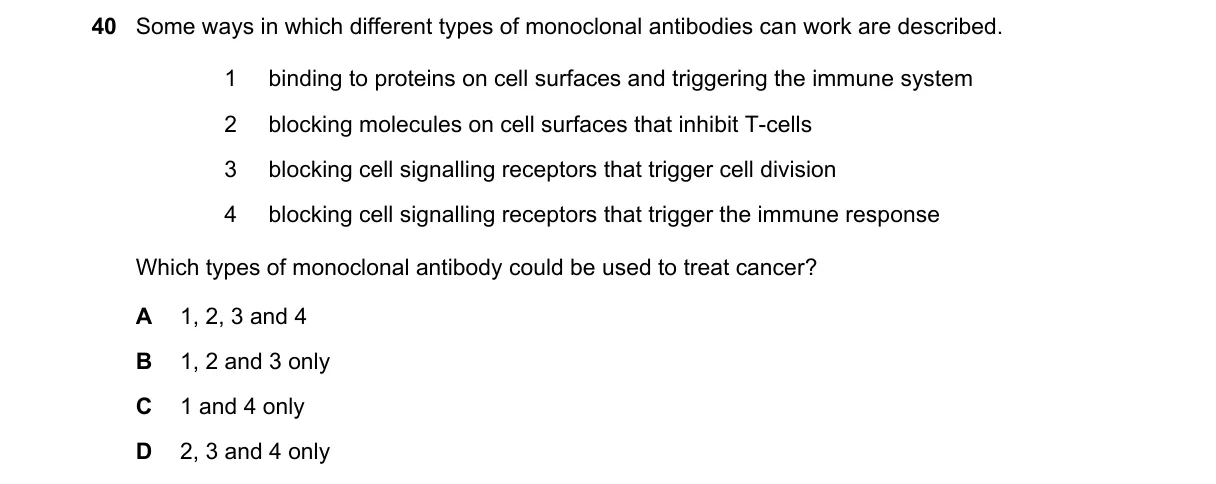
Answer choices
- A1, 2 and 4 only
- B1, 2 and 3 only
- C1 and 3 only
- D2 and 4 only
Explanation
Monoclonal Antibodies Enhancing Anti-Cancer Immunity
Steps:
- Review each description: 1 activates immune response via cell surface binding; 2 removes T-cell suppression; 3 interrupts signaling that could hinder immune targeting; 4 suppresses overall immunity.
- Match to cancer therapy: Effective mAbs either trigger immune attack on tumors (1), unleash T-cells by blocking checkpoints (2), or block pro-tumor signaling pathways (3).
- Eliminate 4: Binding immune-inhibiting molecules would weaken anti-cancer defenses, unsuitable for treatment.
- Select combination: 1, 2, and 3 align with standard cancer mAb strategies like rituximab (1), pembrolizumab (2), and trastuzumab (3).
Why B is correct:
- B includes 1, 2, and 3, which directly support tumor targeting and immune activation per oncology guidelines on mAb mechanisms.
Why the others are wrong:
- A includes 4, which promotes immune suppression counterproductive to cancer therapy.
- C omits 2, excluding key checkpoint inhibitors essential for immunotherapy.
- D pairs 2 with 4, combining T-cell enhancement with immune inhibition, yielding no net anti-cancer benefit.
Final answer: B
Topic: Antibodies and vaccination
Practice more A Levels Biology (9700) questions on mMCQ.me